

Cookie Jar Reserves – How Companies Smooth Earnings and Mislead Investors
Learn how cookie jar reserves distort financial statements, real-world examples like Microsoft and WorldCom, and how investors can detect this 10-K trick.
Introduction: Smooth Earnings Aren’t Always Safe
Investors love stability. When a company reports profits that rise steadily year after year, it creates the image of strength and reliability. But as I’ve learned both as a banker analyzing risk and as an investor protecting capital—profits that look too perfect can actually be a red flag of cookie jar reserves.
One of the oldest tricks in the book is called cookie jar reserves. Companies hide extra profits in a “jar” during good years, then dip into those reserves in lean years to make results look steady. On the surface, it seems harmless. In reality, it hides the company’s true economic health and misleads investors who rely on accurate numbers to make decisions.
What Are Cookie Jar Reserves?
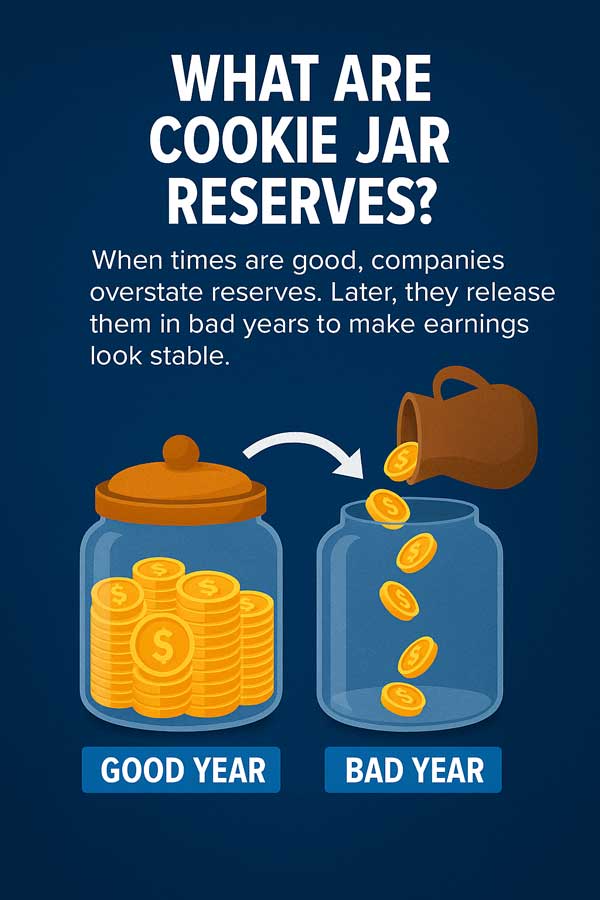
Cookie jar reserves happen when companies:
Overstate expenses or liabilities in strong years — examples include bad debt allowances, warranty costs, or restructuring charges.
Release those reserves in weak years — boosting reported earnings to make results look smooth and predictable.
This type of earnings management doesn’t always violate accounting rules, but it distorts reality and keeps investors, lenders, and regulators from seeing the company’s real condition.
Where to Spot Them in a 10-K
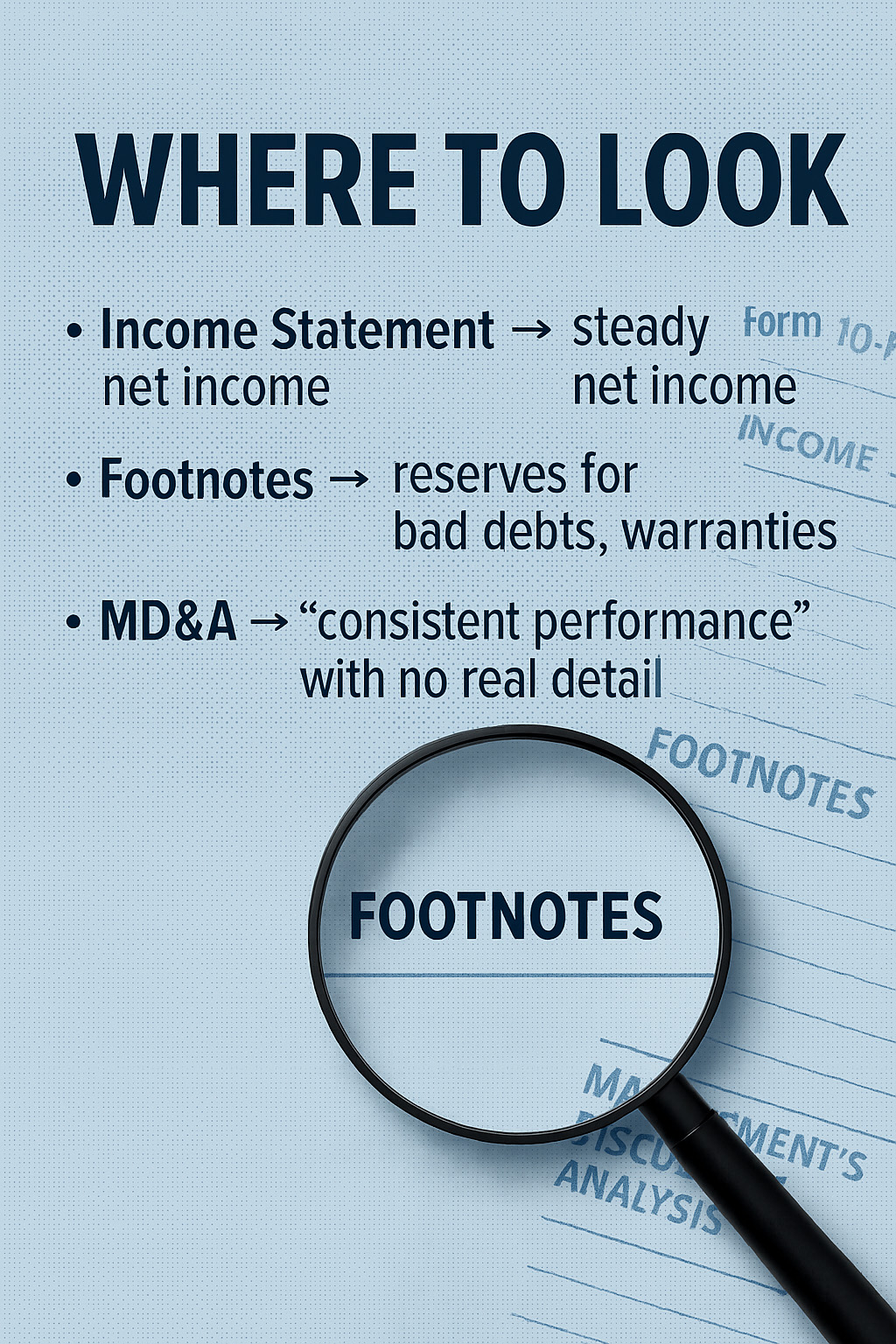
If you’re reading an SEC 10-K filing, pay attention to:
Income Statement → unusually steady net income.
Footnotes → “Allowance for Doubtful Accounts,” “Warranty Reserves,” or restructuring details.
MD&A → vague statements about “consistent performance” without supporting data.
As an analyst, I’ve learned that the truth often hides in the footnotes, not the headlines.
Real-World Examples
Microsoft (1990s): The SEC investigated Microsoft in 1999 for using cookie jar reserves to manage earnings. The company overstated reserves in good years and released them later to hit earnings targets. While Microsoft avoided heavy penalties, it was forced to change its practices and provide better disclosures.
WorldCom (2002): WorldCom combined cookie jar reserves with expense reclassification to inflate earnings by over $11 billion. When the fraud unraveled, it triggered the largest bankruptcy in U.S. history at the time—destroying billions in shareholder value and eroding trust in financial reporting.
General Electric (2018): GE shocked investors when it had to add $15 billion to insurance reserves, revealing years of under-reporting. The discovery led to a major stock price drop and damaged the company’s credibility.
My Personal Lesson on Cookie Jar Fraud
Early in my career, I sat in credit committee meetings at a global bank reviewing financial statements that looked “too clean.” As an analyst, I was trained to trust numbers, but something didn’t add up. When we dug deeper, reserves told a very different story—hidden exposures that management hadn’t explained.
Later, as an investor, I saw the same problem in companies whose “stable earnings” were little more than accounting smoke and mirrors. Those experiences taught me a lasting lesson: smooth profits often mean hidden risks.
That’s why today, through Gary Rushin Unplugged, I use accounting, forensic analysis, and AI tools to expose these red flags and teach others how to protect themselves.
Why It Matters to You
Cookie jar accounting may not sound dramatic, but it can:
Give investors false confidence.
Help executives hit bonus targets they didn’t earn.
Delay recognition of real problems until it’s too late.
Forensic analysis—especially when paired with AI—is the best defense. It helps you spot these tricks early, protect your capital, and hold management accountable.
My Takeaway
Smooth earnings can be a warning sign, not a strength. Cookie jar reserves create the illusion of stability while hiding financial stress. As both an analyst and investor, I’ve seen how costly it can be to miss this trick. That’s why I teach others to read between the lines and use AI tools to uncover the truth.
Call to Action
This blog is part of my series: 12 Accounting Tricks That Hide the Truth in 10-Ks.
👉 Follow Gary Rushin Unplugged for the next article: Channel Stuffing – Inflated Sales That Don’t Stick.
And if you want to dive deeper, my course Forensic Financial Statement Analysis Using AI (co-taught with Chris Haroun) shows you how to detect cookie jar accounting and 11 other red flags that companies use to shape their story.
Have you ever seen a company’s earnings that looked “too perfect” and wondered if they were real?
ABOUT GARY RUSHIN
Gary Rushin is a seasoned CPA, former investment banker, and turnaround professional with over 30 years of experience in accounting, finance, and business strategy. He has advised Fortune 500 companies, growth-stage startups, and distressed businesses on financial restructuring, corporate governance, and risk management. Known for his expertise in forensic accounting and financial statement analysis, Gary combines deep technical knowledge with AI-driven tools to help entrepreneurs, investors, and executives uncover hidden risks, protect capital, and drive sustainable growth.