

Introduction to Founder Equity
A founder equity split is a crucial decision for startups, as it significantly impacts the company’s growth and the relationships between founders. Therefore, it’s essential to understand how to split equity fairly among co-founders. Founders often employ several common approaches to equity splits, each with its own advantages and disadvantages.
Equity distribution should be based on various factors, including each co-founder’s contributions, roles, risk, and expectations, to ensure a fair and successful startup and type of business structure.
Co-founders should discuss and agree on the equity split to avoid future conflicts and ensure a strong foundation for the company. It is important to discuss expectations openly, including individual goals, commitment levels, and future plans.
Equity Splits Importance
Understanding equity splits is crucial for startup founders, as it affects the company’s equity structure and future fundraising rounds. One approach is equal equity, where ownership is divided equally among founders; while simple, this method may not always reflect actual contributions and can have both pros and cons.
A well-planned equity distribution can help attract investors, allocate equity fairly, and support the company’s growth. Splitting equity requires transparency and ongoing communication to ensure arrangements remain fair as the company evolves.
Ultimately, co-founder equity splits and founder equity splits are key decisions in startup formation that shape relationships, leadership, and long-term success.
Understanding Equity Distribution
Equity split refers to the division of ownership and equity stake among co-founders, investors, and employees, and is a critical aspect of startup equity distribution.
Co-founders should consider various factors, such as contributions, risk, and expectations, when dividing equity to ensure a fair split. Different founders may have different contributions and thus different equity stakes.
Equity distribution can significantly impact the company’s growth, as it affects the allocation of resources, voting rights, and future fundraising rounds. Equity division can be influenced by specific circumstances, such as team roles, funding needs, and long-term goals.
A fair equity split can motivate co-founders, attract investors, and support the company’s long-term success. The amount of equity each founder receives often depends on the value they have contributed to the startup.
Understanding how to divide equity fairly is essential for startup founders to make informed decisions about their company’s equity structure. Allocating equity often involves determining the percentage each founder receives and whether some founders should receive a larger share based on their different contributions.
Factors to Consider When Dividing Equity

When it comes to dividing equity among co-founders, there’s no one-size-fits-all formula. A fair founder equity split requires a thoughtful evaluation of each co-founder’s contributions, risk tolerance, and ongoing commitment to the company. Consider the specific roles and responsibilities each founder will take on, as well as the skills and resources they bring to the table. The stage of your startup, the industry landscape, and current market conditions can all influence the most appropriate equity distribution.
It’s also important to factor in personal circumstances—such as family obligations or financial needs—that might affect a founder’s ability to contribute. Aligning your equity split with the company’s values and long-term vision ensures that everyone is motivated to work toward shared goals. Flexibility is key; as your startup grows and evolves, your equity structure may need to adapt to new realities. By carefully considering these elements, founders can create a founder equity split that is fair, motivating, and sets the stage for sustainable growth.
Alternatives to Traditional Equity Splits
Co-founders can consider alternative equity split models, such as dynamic equity or role-based splits, to ensure a fair and successful startup. A vesting schedule is often used in these models to ensure that equity is earned over time or upon reaching specific milestones.
Equity splits can be based on various conditions, such as performance metrics or milestones, to motivate co-founders and support the company’s growth. The involvement of an angel investor and the amount of investment can also significantly influence how equity is divided among founders.
Co-founders can use equity split models, such as the equal split or weighted contribution model, to allocate equity fairly. Tracking contributions and ownership through an account system is crucial for maintaining transparency and making future adjustments.
Venture Capitalist and Angel Investors
Venture capitalists and angel investors can offer guidance on equity splits, helping co-founders make informed decisions. Choosing the right partner and identifying a lead or CEO is crucial, as these roles often determine the structure and fairness of equity splits. In some cases, the lead may act as an interim CEO until a permanent CEO is appointed.
Scenarios involving CEOs, a serial entrepreneur, one founder, or two founders can all impact how equity is split, with each role bringing different expectations and negotiation dynamics to the table.
Co-founders should be aware of the different equity split models and choose the one that best suits their company’s needs. It is important to distinguish between an equal equity split (where all co-founders receive the same percentage) and equal equity splits (which may refer to multiple equal divisions among several founders), as each has different implications for control and future negotiations. The company’s growth and overall business objectives should also be considered, as these factors can necessitate adjustments to equity splits over time. Money, ideas, and the original idea itself are all key factors in determining how equity is allocated among founders.
Notable startup cultures, such as those fostered by Y Combinator and in Silicon Valley, offer unique perspectives and practices regarding equity splits. Equity splits are especially critical in the early stage of a startup, where the role of each co-founder must be clearly defined to ensure long-term success.
Equity Splits and Funding
The way you structure your equity split can significantly impact your startup’s ability to raise capital. Venture capitalists and angel investors often scrutinize equity splits during their due diligence process, looking for signs of fairness and sound management. An equity split that appears lopsided or arbitrary can raise red flags for investors, potentially making it harder to secure funding.
A transparent and well-justified equity distribution reassures investors that the founding team is aligned and committed, which is essential for attracting capital and supporting future fundraising rounds. Startup founders should always consider how their equity splits will be perceived by potential investors and ensure that their capital allocation strategy supports both immediate and long-term growth. By prioritizing fairness and clarity in your equity structure, you’ll be better positioned to raise capital and build lasting relationships with investors.
Divide Equity Fairly
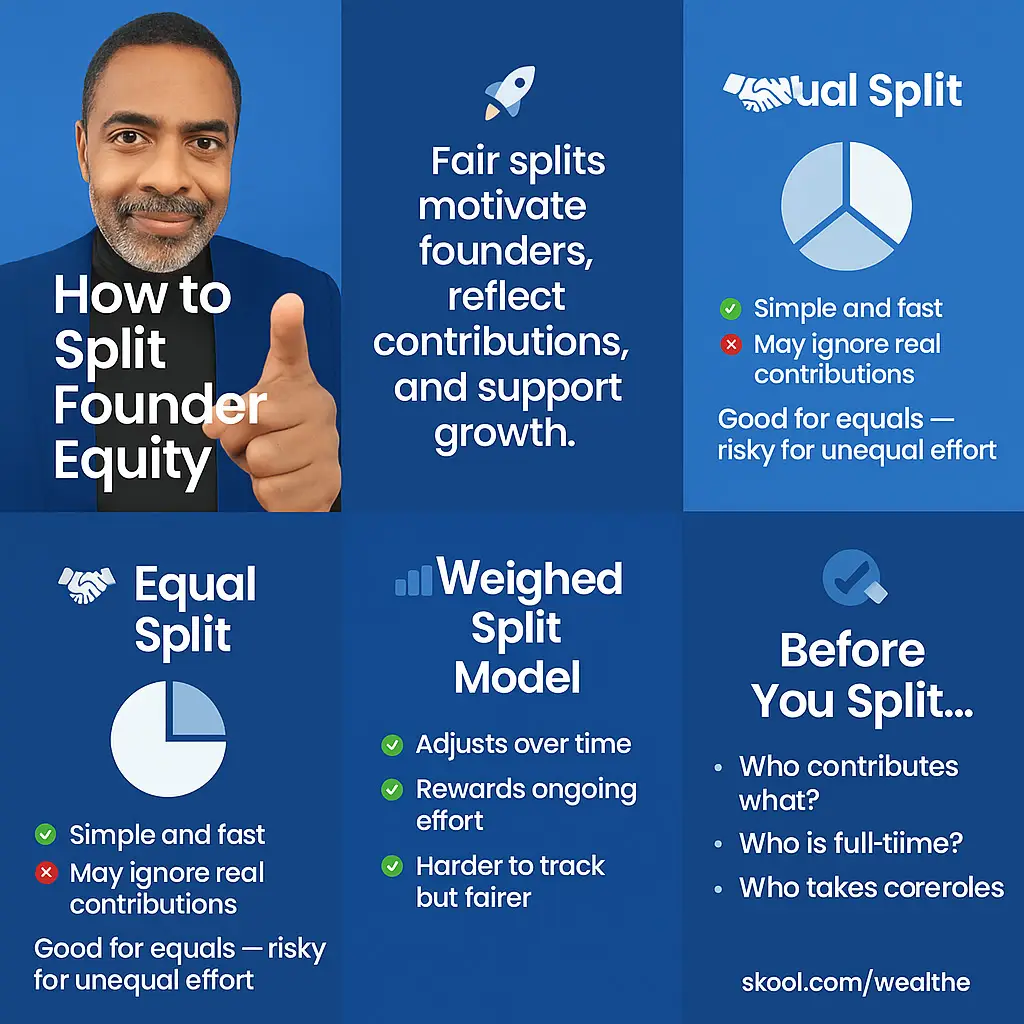
Dividing equity fairly among co-founders is one of the most important decisions you’ll make as a startup team. A fair equity split should reflect the actual contributions, risks, and commitments of each founder, rather than defaulting to an equal split for convenience. Take the time to openly discuss each co-founder’s role, the value they bring, and the sacrifices they’re making for the company.
Avoid arbitrary decisions and instead use a structured approach to dividing equity, considering both tangible and intangible contributions. This process not only helps ensure that everyone feels valued but also fosters a culture of trust and collaboration. By focusing on fairness in your equity distribution, you’ll create a strong foundation for your startup’s success and keep your team motivated and aligned as you grow.
Conclusion on Equity Distribution
In summary, equity distribution is a cornerstone of startup success, requiring careful planning and open communication among co-founders. The ultimate goal is to create an equity split that is fair, transparent, and flexible enough to adapt to your company’s evolving needs. By considering each founder’s contributions, risks, and commitments—and avoiding arbitrary or equal splits—you can build a structure that supports motivation, trust, and long-term growth.
A well-designed equity split not only aligns with your company values and vision but also positions your startup to attract investors, raise capital, and navigate future scenarios such as founder departures or new funding rounds. Whether you’re in the early stages or preparing for rapid expansion, taking the time to get your founder equity split right is one of the most important decisions you’ll make. By prioritizing fairness and open discussion, you’ll set your company, your co-founders, and your team up for lasting success.