


Introduction to Startup Breakups
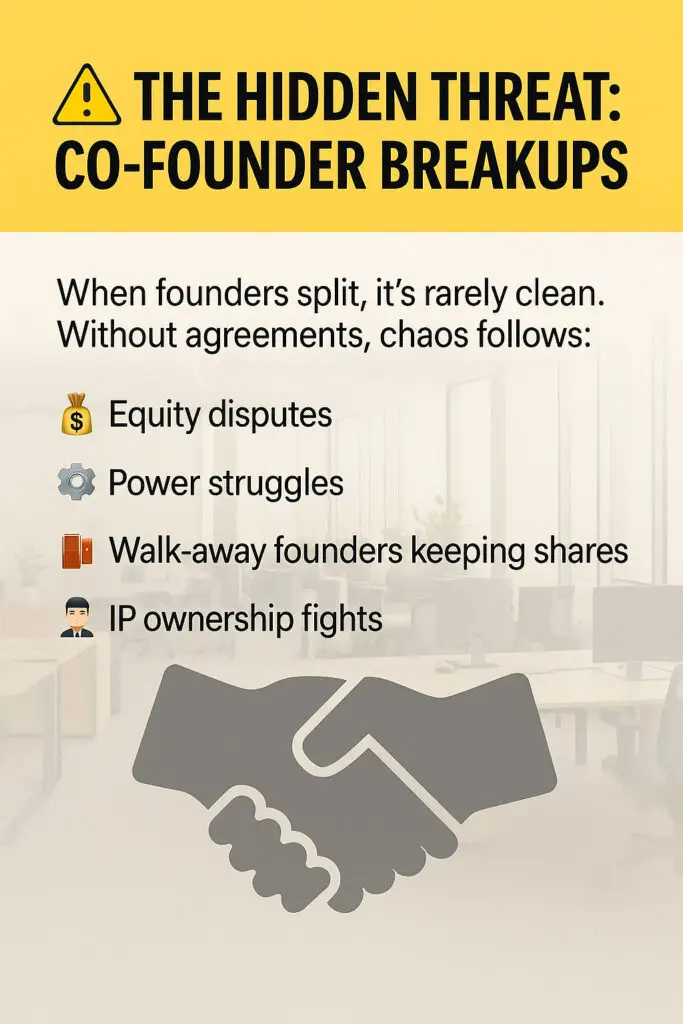
Startup breakups can be devastating, but learning from others’ experiences can help – co founders avoid common pitfalls and ensure a smoother transition.
Many co-founders face challenges in the early days of their company, including co-founder conflict and unclear roles and responsibilities. Many companies and projects encounter similar challenges during their formation and growth. Common reasons for startup breakups include a lack of market need, running out of cash, and founder disagreements.
A well-structured founders’ agreement can help mitigate these risks and protect the interests of all parties involved.
Most founders underestimate the importance of a comprehensive agreement, which can lead to disputes and financial losses.
In this blog post, we will explore the essential tips and practical solutions for navigating startup breakups and provide valuable insights for co-founders.
Founders’ Agreement Basics
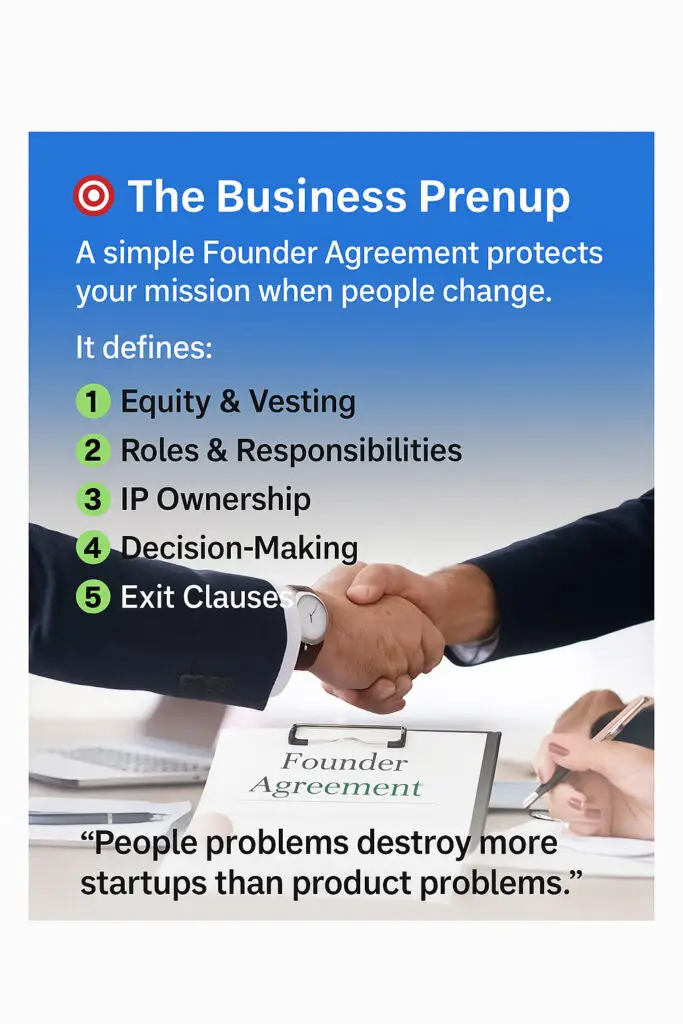
A founders’ agreement is a critical document that outlines the roles, responsibilities, and expectations of each co-founder. It serves as a legally binding contract between each party involved.
It should include provisions for equity distribution, decision-making processes, and conflict resolution. Clearly identifying each party in the agreement is essential for legal clarity and enforceability.
A well-crafted agreement can help prevent disputes and ensure a smooth transition in case of a breakup. Time-based vesting provisions in a founders’ agreement can protect the startup and its collaborators by ensuring that equity is earned over time.
Co-founders should establish a clear understanding of their responsibilities and expectations, such as vesting, to avoid confusion and misunderstandings. Thorough documentation and writing are crucial to ensure legal clarity and prevent disputes.
The agreement should also include details about intellectual property protection and ownership.

Co-Founder Roles and Responsibilities
Defining clear roles and responsibilities is crucial for the success of a startup – co-founders must work together seamlessly. When two or more co-founders are involved, clear role definition becomes even more critical to avoid confusion and miscommunication.
A great idea can only be executed effectively if each co-founder knows their duties and expectations. It is also important to recognize each person’s unique contributions and perspectives within the team.
Many co-founders have overlapping skills, but a well-structured agreement can help prevent conflicts and ensure a smooth workflow. Arguments between co-founders often arise during the early years of a startup’s life, making it essential to address potential conflicts early.
Typically, one co-founder takes the lead as CEO, while others focus on specific areas of the business. However, when disparities in workload or availability arise, resentments can form within the team, threatening its stability.
Establishing a clear chain of command can help prevent power struggles and ensure that decisions are made efficiently. Without proper structure and communication, it can be nearly impossible to predict contributions or resolve conflicts effectively.
Managing Co-Founder Conflict
Co-founder conflict is inevitable, but it can be effectively managed through clear communication and a well-defined dispute resolution process. It is important to establish clear decision-making authority and conflict resolution strategies within the partner relationship to ensure smooth management and prevent disagreements from escalating.
Co-founders should avoid equal decision-making authority to prevent conflicts and ensure that decisions are made efficiently.
Parties involved in a dispute should try to resolve their differences amicably, without involving external parties.
A predefined disagreement resolution process can help co-founders navigate conflicts and find a mutually beneficial solution.
Other founders can learn from the experiences of successful startups and implement strategies to prevent conflicts.
Creating a safe and open environment for discussion can help co-founders address issues before they escalate and become more significant. Holding a dedicated space for honest communication during conflicts enables partners to express their concerns openly and fosters a deeper understanding.
For example, having a structured conflict resolution process, such as setting clear decision-making hierarchies and procedural frameworks, can prevent disputes from escalating and provide guidance for resolving issues efficiently. Do not wait until the formation of a board to deal with these issues.
Intellectual Property Protection
Intellectual property protection is critical for startups, as it can make or break the business.
Co-founders should ensure that their agreement includes provisions for IP protection and ownership.
Many startups have suffered due to lack of IP protection, resulting in significant financial losses.
A comprehensive agreement should include details about IP assignment, licensing, and protection. It is essential to ensure that all intellectual property created by founders, employees, or contractors is properly assigned to the company.
Co-founders should also consider registering their IP with the relevant authorities to prevent infringement. Hiring an experienced startup attorney is essential to protect interests during a co-founder breakup and ensure that IP-related matters are handled professionally.
Agreement Templates and Resources
Agreement templates can serve as a useful starting point for co-founders seeking to create a comprehensive founders’ agreement. Using a professionally crafted template streamlines the agreement creation process, ensuring consistency and legal compliance from the outset.
Many online resources offer customizable templates for sales contracts, partnership agreements, and other business documents. Businesses utilize these templates to maintain consistency, ensure legal compliance, and improve operational efficiency across various agreements.
Co-founders can use these templates to create a tailored agreement that meets their specific needs. Templates can be easily customized with client or company details, making the process accessible even without legal expertise.
Other resources, such as blog posts and online forums, can provide valuable insights and advice for co-founders navigating startup breakups. Well-organized documentation is essential to ensure legal accuracy, efficiency, and consistency across all agreements.
Utilizing these resources can help co-founders create a robust agreement that protects their interests and ensures a smooth transition. It is essential to bring agreements to a successful conclusion by ensuring that all parties finalize and sign the necessary documents.
Treat the creation of your agreement as a project that brings your business relationships to life, making them tangible, professional, and adaptable as your company evolves.
Post-Breakup Procedures
In the event of a breakup, co-founders should follow a clear procedure to ensure a smooth transition.
This may involve notifying employees, customers, and investors, as well as transferring ownership and control.
Co-founders should establish a clear plan for distributing assets, liabilities, and equity.
The procedure should also include provisions for protecting intellectual property and confidential information.
A well-planned post-breakup procedure can help minimize disruption and ensure the continued success of the business.
Financial Implications
Startup breakups can have significant financial implications, including the loss of investment, revenue, and assets. It is important to consider the flow of money, available funding, and market size when evaluating the overall financial impact of a breakup.
Co-founders should carefully consider the financial implications of a breakup and plan accordingly.
A comprehensive agreement should include provisions for the distribution of financial resources, including equity, assets, and liabilities. The agreement should also address fair compensation for founders and co-founders to ensure equitable rewards for contributions.
Co-founders should also consider the tax implications of a breakup and seek professional advice to minimize their tax liability.
A well-planned financial strategy can help co-founders navigate the financial implications of a breakup and ensure their financial stability.
Emotional Implications
Startup breakups can be emotionally challenging, particularly for co-founders who have invested a significant amount of time and effort into the business.
Co-founders should prioritize their emotional well-being and seek support from friends, family, or professional counselors. Taking time to rest and recharge during the transition can help co-founders process their emotions and regain their energy.
A breakup can be a difficult and stressful experience, but it can also be an opportunity for growth and learning.
Co-founders should take the time to reflect on their experiences and identify areas for improvement.
By prioritizing their emotional well-being, co-founders can navigate the emotional implications of a breakup and emerge stronger and more resilient.
Rebuilding and Recovery
After a breakup, co-founders may need to rebuild and recover, both personally and professionally.
This can involve seeking new opportunities, building a new team, and creating a new business strategy.
Co-founders should be open to learning from their experiences and using them as an opportunity for growth.
A well-planned rebuilding and recovery strategy can help co-founders navigate the challenges of a breakup and emerge stronger and more successful.
By focusing on their strengths and weaknesses, co-founders can create a new and improved business strategy that sets them up for success.
Conclusion and Recommendations
In conclusion, the foundation of any successful startup is built on the strength of the relationship between co-founders. Establishing a comprehensive founders’ agreement is not just a formality—it’s a critical step in preventing co-founder conflict and ensuring the smooth operation of the business. By using agreement templates as a starting point, co-founders can create tailored documents that clearly define roles, responsibilities, equity distribution, and decision-making rights. It’s essential for all parties involved to openly discuss and document their expectations, interests, and contributions from the outset.
Protecting intellectual property should also be a top priority, as it safeguards the unique ideas and innovations that distinguish your business. Many co-founders have found that establishing a “co-founder prenup” helps clarify equity arrangements and aligns everyone’s interests, thereby reducing the risk of disputes down the road. By prioritizing clear agreements and open communication, co-founders can minimize risks, protect their business, and set the stage for long-term startup success. Remember, the effort you put into creating strong agreements today will pay dividends as your company grows and evolves.
Final Thoughts on Startup Success
Ultimately, the journey to startup success is shaped by the ability of co-founders to collaborate effectively and make informed decisions together. Building a thriving business goes beyond having a great idea—it requires a deep understanding of each co-founder’s strengths, interests, and working styles. Many co-founders have discovered that scheduling regular check-ins away from the daily grind, such as biannual retreats, can help strengthen their relationship and reduce emotional tension.
Implementing a clear disagreement resolution process and adopting a RASCI structure for decision-making can further streamline operations and prevent conflicts from escalating. By focusing on their shared goals and maintaining open lines of communication, co-founders can navigate the challenges of the early days and lay the groundwork for a successful company. With the right agreement templates, a solid grasp of intellectual property protection, and a commitment to ongoing collaboration, co-founders can protect their interests, attract investors and clients, and lead their startup to lasting success. Remember, it’s the consistent effort, structure, and dedication that transform a promising idea into a standout business in the competitive startup world.
ABOUT GARY RUSHIN
Gary Rushin is a seasoned CPA, former investment banker, and turnaround professional with over 30 years of experience in accounting, finance, and business strategy. He has advised Fortune 500 companies, growth-stage startups, and distressed businesses on financial restructuring, corporate governance, and risk management. Known for his expertise in forensic accounting and financial statement analysis, Gary combines deep technical knowledge with AI-driven tools to help entrepreneurs, investors, and executives uncover hidden risks, protect capital, and drive sustainable growth. Reach out to Gary at https://garyrushinunplugged.com/