


Master investor due diligence with our essential guide. Make informed decisions and minimize risks. Read the article to enhance your investment strategy.
Introduction to Due Diligence
Due diligence is a thorough investigation of a company’s operations, finances, and legal standing to minimize risk and drive profitability in investments.
The due diligence process fosters transparency and provides valuable insights when evaluating potential investments, involving a thorough review of financial statements, business plans, and intellectual property.
Understanding the due diligence process is essential for venture capitalists, angel investors, and individual investors to make informed decisions.
Venture capital plays a significant role in funding startups, and the due diligence process is a key step for venture capital firms when evaluating potential investments.
Due diligence is one of the last steps before a formal investment commitment, allowing investors to verify that the startup is financially sound, legally compliant, and capable of executing its business plan.
Conducting due diligence is one of the last steps before a formal investment commitment, allowing investors to verify the company’s legal structure, financial stability, market positioning, and competitive landscape, ensuring the company is financially sound, legally compliant, and capable of executing its business plan.
A clear understanding of the investment and the company’s financial health, operational due diligence, and market position is crucial for investment readiness.
Conducting due diligence provides negotiation leverage by offering a deeper understanding of an investment’s strengths and weaknesses.
A due diligence checklist is a way for the acquiring company to analyze and evaluate the target firm during a sale or merger before completing the deal.

Understanding the Business
Business Model
Evaluating a company’s business model is critical in the due diligence process to assess its potential for future growth and profitability. Assessing product market fit is crucial to determine whether the company’s product resonates with its target market and supports organic growth.
A solid business plan and model can significantly influence an investor’s decision to invest in a company.
The business model should demonstrate a clear understanding of the target market, revenue streams, and competitive landscape. Analyzing unit economics helps investors understand the revenue and cost structure per customer or product, which is essential for evaluating the business model’s long-term viability. Additionally, evaluating a startup’s ability to adapt to industry trends and scale operations is crucial for assessing its long-term growth and investment potential.
A successful due diligence process can lead to a smooth investment deal, while any red flags could delay or derail potential funding.
A well-structured business model can help mitigate risk and increase the potential for returns on investment.
The due diligence process ensures that potential acquirers gain an accurate understanding of a company.
Financial Analysis
Financial Projections
Reviewing financial projections is a critical aspect of the due diligence process to assess a company’s potential for growth and profitability.
Financial projections should include cash flow statements, profit margins, and revenue growth to provide a comprehensive view of the company’s financial performance and growth potential.
Investors typically conduct due diligence after they have expressed serious interest in a startup but before finalizing the investment.
Senior finance professionals should be involved in the review of financial projections to ensure accuracy and validity.
Financial models should be stress-tested to evaluate a startup’s ability to adapt, innovate, and succeed within its industry and market, as this is essential for assessing long-term growth potential and competitive edge.
Due Diligence Process
Conducting Due Diligence
Conducting due diligence involves examining a company’s financial records, operational processes, and legal structure to identify potential risks and valuable assets. The due diligence process often involves handling sensitive data, such as financial and legal documents, which must be carefully protected and securely shared to maintain confidentiality and build investor trust.
Investors conduct due diligence to confirm that the company is as it appears and to identify any potential risks or liabilities.
The diligence process should include a review of employment contracts, human resources, and customer relationships to assess the company’s ability to raise capital and grow.
A structured approach to the due diligence process can help ensure that all critical aspects of the company are reviewed and assessed.
The process ensures that potential investors have a clear understanding of the company’s financial health, operational efficiency, and market position.
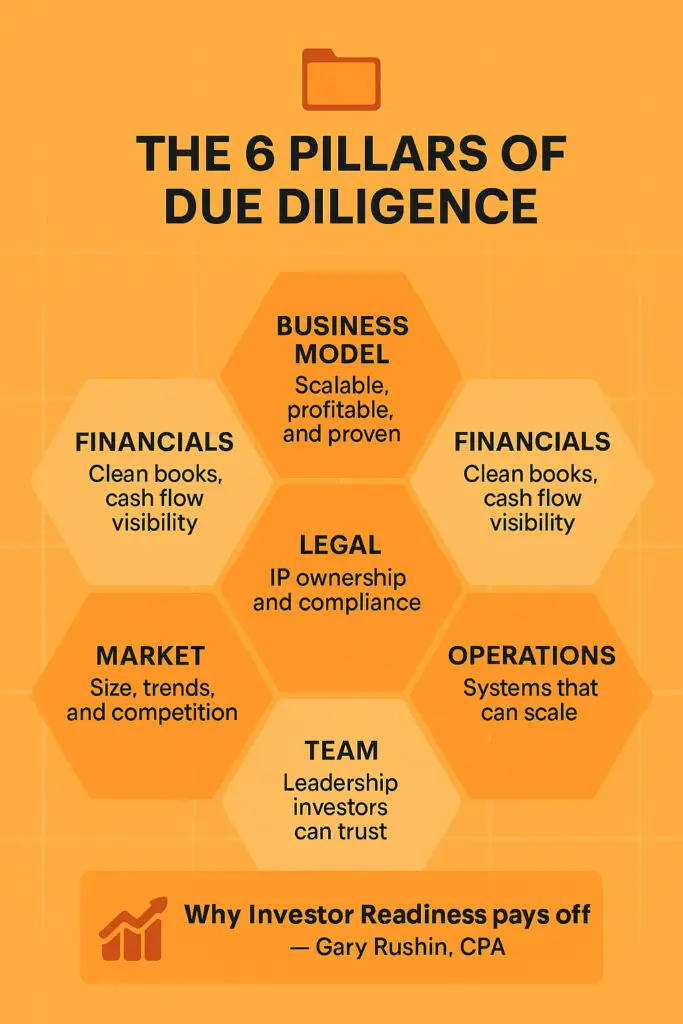
Business Plan Review
A business plan review is an essential part of the due diligence process to assess a company’s growth potential, as well as its potential for profitability.
The business plan should demonstrate a clear understanding of the target market, competitive landscape, and revenue streams.
The plan should include financial projections, marketing strategies, and operational processes to provide a comprehensive view of the company’s potential.
A well-structured business plan can help mitigate risk and increase the potential for returns on investment.
Financial Performance
Evaluating a company’s financial performance is critical in the due diligence process to assess its potential for growth and profitability.
Financial performance should be assessed using key metrics such as EBITDA, profit margins, and revenue growth.
A company’s financial performance should be compared to industry trends and benchmarks to assess its relative performance. It is also important to evaluate the company’s industry position, competition, and market dynamics, including how the company’s performance and competitiveness measure up within its industry.
A thorough review of financial performance can help identify potential risks and opportunities for growth.
EBITDA Positive Performance
Achieving EBITDA positive performance is a critical milestone for companies, demonstrating their ability to generate profits and grow.
EBITDA positive performance should be assessed in the context of industry trends and benchmarks to determine its relative significance.
A company’s ability to maintain EBITDA-positive performance over time is a key indicator of its financial health and potential for growth.
EBITDA positive performance can significantly influence an investor’s decision to invest in a company.
Market and Competition Analysis
Conducting a market and competition analysis is essential in the due diligence process to assess a company’s potential for growth and profitability.
The analysis should include a review of industry trends, market size, competitive landscape, and the company’s market share to determine its market position and potential for growth.
Assessing the market size, competition, and industry trends is a key part of the due diligence process, as it helps investors gauge a startup’s growth potential and strategic positioning.
A thorough review of the market and competition can help identify potential risks and opportunities for growth.
The analysis should include an assessment of the company’s competitive advantage, including its proprietary technology, intellectual property, and customer relationships.
Operational Review
An operational review is a critical aspect of the due diligence process to assess a company’s efficiency and effectiveness. Operational improvements should focus on increasing efficiency without sacrificing quality, ensuring customer satisfaction and long-term success.
Investors will review the startup’s core processes, including day-to-day operations, supply chain management, and overall efficiency during operational due diligence.
The review should include an assessment of the company’s operational processes, management team, and human resources.
Securing intellectual property ownership is crucial prior to entering the due diligence phase.
A thorough review of operations can help identify potential risks and opportunities for growth.
The review should include an assessment of the company’s ability to scale and grow, including its infrastructure, technology, and supply chain.
Investors will evaluate a startup’s operational systems to assess its efficiency and scalability during due diligence.
The review should include an assessment of the company’s operational processes, management team, and human resources.
A thorough review of operations can help identify potential risks and opportunities for growth.
The review should include an assessment of the company’s ability to scale and grow, including its infrastructure, technology, and supply chain. A well-organized operation shows investors that the startup can scale effectively, handle increasing demand, and continue delivering on its promises.
Legal Review and Compliance
Legal Review
A thorough legal review and compliance check are essential components of the due diligence process, enabling potential investors to assess the target company’s legal standing and identify potential risks that could impact future growth.
The diligence process involves examining employment contracts, intellectual property rights, and other legal documents to ensure the company is compliant with all relevant laws and regulations.
Due diligence became common practice in the United States with the passage of the Securities Act of 1933.
Senior finance professionals and venture capitalists should conduct a comprehensive legal review to uncover any potential legal disputes or liabilities that may affect the company’s financial health and investment readiness.
Reviewing the company’s legal structure and analyzing financial records, such as cash flow statements and balance sheets, helps investors evaluate the company’s financial performance and spot any hidden risks or obligations.
A well-structured legal review is a critical aspect of the due diligence checklist, as it helps mitigate risk by providing a clear understanding of the company’s legal standing and ensuring that all legal requirements are met.
Legal Compliance
By identifying and addressing potential legal issues early, investors can ensure the target company has a solid plan in place to manage liabilities, which can significantly influence the success of the investment.
Investors will want to see that your startup has legally protected its valuable assets, including patents, trademarks, copyrights, and any proprietary technology or processes.
This process is especially important for venture capitalists and angel investors, as it allows them to evaluate potential investments with confidence, minimize risk, and maximize returns.
Including a comprehensive legal review in the diligence checklist ensures that investors have a clear understanding of the company’s legal position, helping them make informed decisions about which companies to invest in.
Founders must anticipate investor questions to show transparency and readiness during the due diligence process.
Management Team Evaluation
-
Evaluating the management team is a critical component of the due diligence process, as strong leadership is essential for driving business growth and ensuring the company’s financial health.
-
Venture capitalists and angel investors should assess the management team’s experience, skills, and industry knowledge to determine their ability to execute the business plan and achieve financial projections.
-
The diligence process involves reviewing the company’s organizational structure, employment contracts, and human resources policies to ensure the management team is well-equipped to lead the company toward its goals.
-
Management and team due diligence assesses the experience and quality of leadership and key employees.
-
A comprehensive management team evaluation helps investors identify potential risks and opportunities, providing a clear understanding of the company’s leadership and its capacity for future growth.
-
Assessing the management team’s track record, including their success with early stage startups and ability to deliver revenue growth and strong profit margins, is essential for evaluating potential investments.
-
Reviewing the management team’s approach to business planning and their ability to adapt to changing market conditions can reveal whether the company has a solid plan for sustainable growth.
-
For early stage startups, a capable management team is especially important, as their guidance and expertise can make all the difference in navigating challenges and capitalizing on market opportunities.
-
Including management team evaluation in the due diligence checklist ensures that investors have a clear understanding of the company’s leadership, enabling them to make informed decisions and minimize risk when considering new investments.

Risk Assessment and Mitigation
Risk Assessment
Risk assessment and mitigation are fundamental pillars of the due diligence process, empowering potential investors to identify, evaluate, and address potential risks before committing capital. This critical step involves a comprehensive review of the target company’s financial statements, business plans, and operational infrastructure to uncover any vulnerabilities that could impact future growth or profitability.
A thorough risk assessment begins with a detailed analysis of the company’s financial health, including its EBITDA-positive performance, balance sheet, and cash flow statements. By examining these financial records, investors gain a clear understanding of the company’s profit margins, revenue growth, and overall financial performance. This process ensures that potential investors can spot red flags early, such as inconsistent cash flow or declining profit margins, which may signal underlying issues.
Risk Mitigation
Mitigating risk requires more than just reviewing numbers. Investors should also assess the company’s business model, target market, and customer relationships to evaluate its resilience in changing market conditions. Operational due diligence is essential for uncovering potential risks related to human resources, employment contracts, and management team effectiveness. Additionally, reviewing the company’s intellectual property and legal structure helps protect valuable assets and minimize the risk of legal disputes.
To streamline the diligence process, investors should develop a comprehensive due diligence checklist that covers all critical aspects of the target company. This structured approach ensures that nothing is overlooked, from financial models and market analysis to the company’s competitive landscape and product market fit. By leveraging the expertise of senior finance professionals and conducting regular reviews of industry trends, investors can stay ahead of potential risks and adapt their strategies accordingly.
Venture Capital Risk Assessment
For venture capitalists and angel investors, risk assessment and mitigation are especially important when evaluating early stage startups, which often have limited track records and face greater uncertainty. By carefully analyzing market opportunities, growth potential, and the startup’s ability to execute its business plan, investors can minimize risk and position themselves for long-term success.
Ultimately, effective risk assessment and mitigation make all the difference in evaluating potential investments. By prioritizing a structured approach, working with experienced professionals, and maintaining a clear understanding of the company’s financial and operational landscape, investors can significantly influence the outcome of the due diligence process. This not only helps protect capital but also ensures that investments are aligned with future growth and profitability goals, setting the stage for sustainable success in a competitive market.
Using a Due Diligence Checklist
Using a due diligence checklist is essential to ensure that all critical aspects of the company are reviewed and assessed.
The checklist should include a review of financial performance, operational processes, legal structure, and management team.
A thorough review of the company using a due diligence checklist can help identify potential risks and opportunities for growth.
The checklist should be tailored to the specific company and industry to ensure that all critical aspects are assessed.
Organizing documentation in a secure data room is essential for streamlining the due diligence process.
Businesses preparing for an M&A transaction should not view the due diligence checklist as a simple formality.
Diligence Process Best Practices
Adhering to best practices during the diligence process is essential for investors seeking to make smart, informed decisions when evaluating potential investments. A structured approach begins with a thorough review of the target company’s business plan and financial projections, focusing on key indicators such as revenue growth, profit margins, and cash flow statements. Senior finance professionals and venture capitalists should carefully examine financial records, including balance sheets and financial statements, to assess the company’s financial health and uncover any potential risks.
Operational due diligence is equally important, involving a close look at the management team, intellectual property, and the company’s competitive advantage. This step ensures that all critical aspects of the business are evaluated, from proprietary technology to customer relationships. Utilizing a comprehensive diligence checklist helps guide the process, ensuring that no important detail is overlooked and that investors gain a clear understanding of the company’s strengths and weaknesses.
By following these best practices—systematically examining financials, operations, and strategic assets—investors can mitigate risk, identify valuable opportunities, and make confident investment decisions. This disciplined diligence process is vital for anyone looking to invest in companies with strong growth potential and sustainable business models.
Assessing Competitive Advantage
Assessing a company’s competitive advantage is critical in the due diligence process to determine its potential for growth and profitability.
The assessment should include a review of the company’s proprietary technology, intellectual property, and customer relationships.
A thorough review of competitive advantage can help identify potential risks and opportunities for growth.
The assessment should include a review of the company’s ability to maintain its competitive advantage over time.
Clear Understanding of the Investment
Having a clear understanding of the investment is essential for making informed decisions.
The understanding should include a review of the company’s financial performance, operational processes, legal structure, and management team.
A thorough review of the company can help identify potential risks and opportunities for growth.
The understanding should include a review of the company’s potential for growth and profitability, including its competitive advantage and market position.
Final Investment Decision
Reaching the final investment decision is the culmination of a rigorous diligence process, where all gathered insights are weighed to determine the viability of an investment. Investors must carefully consider the company’s financial performance, market position, and the competitive landscape, as well as its potential for future growth and ability to seize market opportunities. A solid plan for investment readiness, built on a clear understanding of the business model and revenue streams, is crucial at this stage.
Venture capitalists, angel investors, and individual investors should adopt a structured approach, ensuring that key components such as market analysis, customer relationships, and employment contracts have been thoroughly reviewed. This comprehensive evaluation helps minimize risk and ensures that the investment aligns with the investor’s goals and risk tolerance.
Ultimately, the final investment decision should be based on a clear understanding of the company’s competitive advantage, its capacity for future growth, and its ability to deliver strong returns. By following a disciplined diligence process and focusing on these critical factors, investors can significantly influence the success of their investments and position themselves for long-term profitability.
ABOUT GARY RUSHIN
Gary Rushin is a seasoned CPA, former investment banker, and turnaround professional with over 30 years of experience in accounting, finance, and business strategy. He has advised Fortune 500 companies, growth-stage startups, and distressed businesses on financial restructuring, corporate governance, and risk management. Known for his expertise in forensic accounting and financial statement analysis, Gary combines deep technical knowledge with AI-driven tools to help entrepreneurs, investors, and executives uncover hidden risks, protect capital, and drive value.