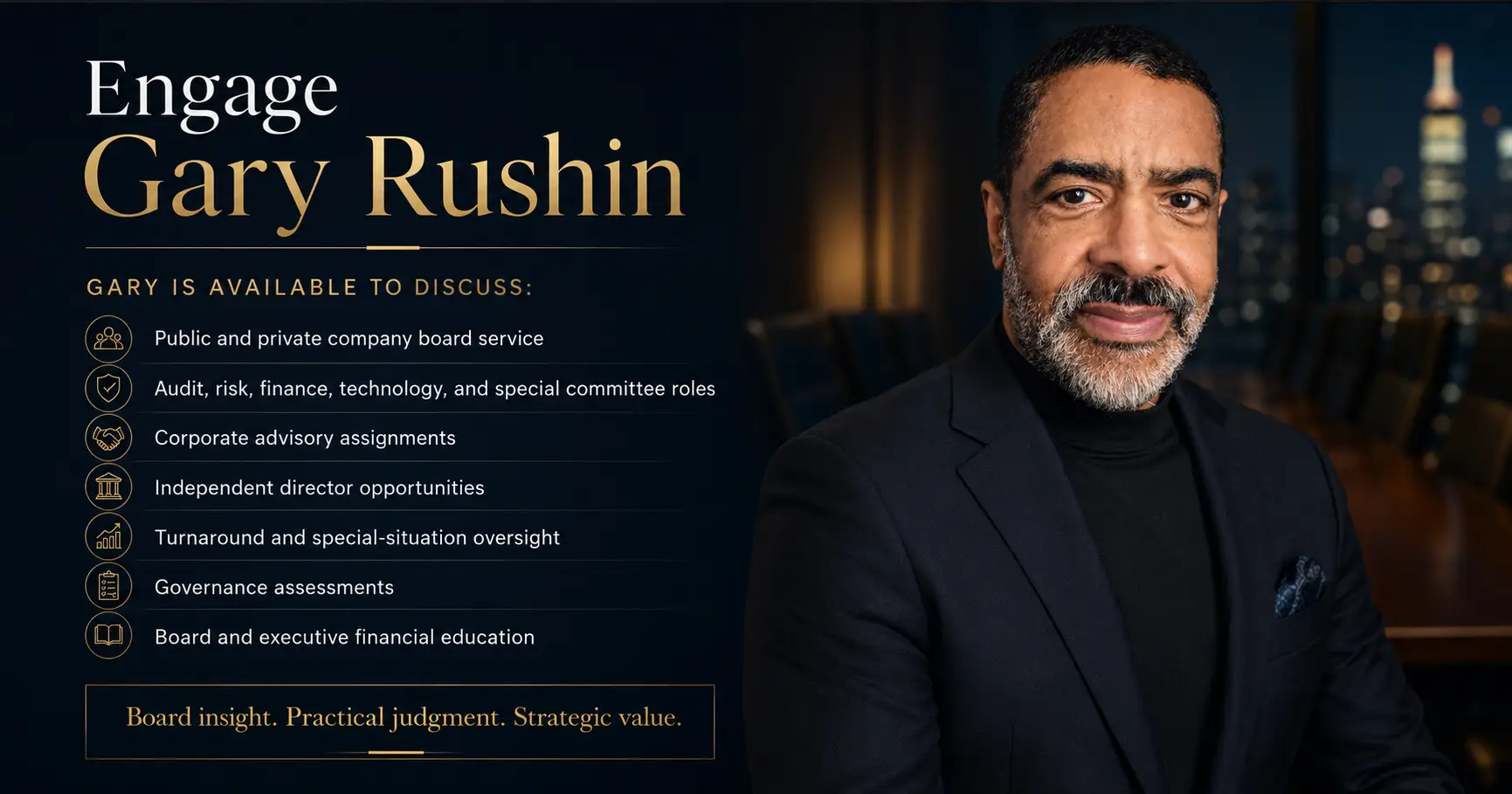
Board Director Qualifications: Boards do not need another director who can simply review a presentation.
They need board director qualifications who know where to challenge assumptions, when to press for evidence, and how to distinguish a temporary operating problem from a structural failure.
Gary Rushin brings a rare combination of experience across public accounting, commercial and international banking, investment banking, corporate finance, manufacturing, technology, restructuring, regulatory advisory, and executive leadership.
Gary’s board contribution is grounded in a practical question:
“What is the business reality behind the numbers, the narrative, and the strategy?”
Hence, Gary Rushin helps boards frame the questions management may not be asking, identify risks that conventional reporting may not reveal, and strengthen governance before problems become crises. Gary Rushin has audit committee qualifications that supports his ability to be a risk committee director and finance committee director. And he brings technology governance experience.
Critical to board director qualifications begins with sound oversight of financial reporting, audit quality, and internal controls critical that makes up board competency. Therefore, strong board director qualifications require the ability to test assumptions, question results, and spot warning signs early.
Moreover, boards must guide capital use with care. Effective board director qualifications include judging cash needs, debt levels, investment returns, and the risks tied to growth plans.
In addition, risk oversight must connect finance, operations, technology, law, and leadership. Strong board director qualifications help directors see how one risk can spread across the whole business.
Similarly, boards need clear judgment during deals, turnarounds, and major change. Gary’s board director qualifications support work involving M&A, restructuring, ERP change, crisis response, and post-deal execution.
Finally, good board service depends on independence, clear thought, and the courage to ask hard questions. These skills help protect the company, support management, and preserve long-term shareholder value.
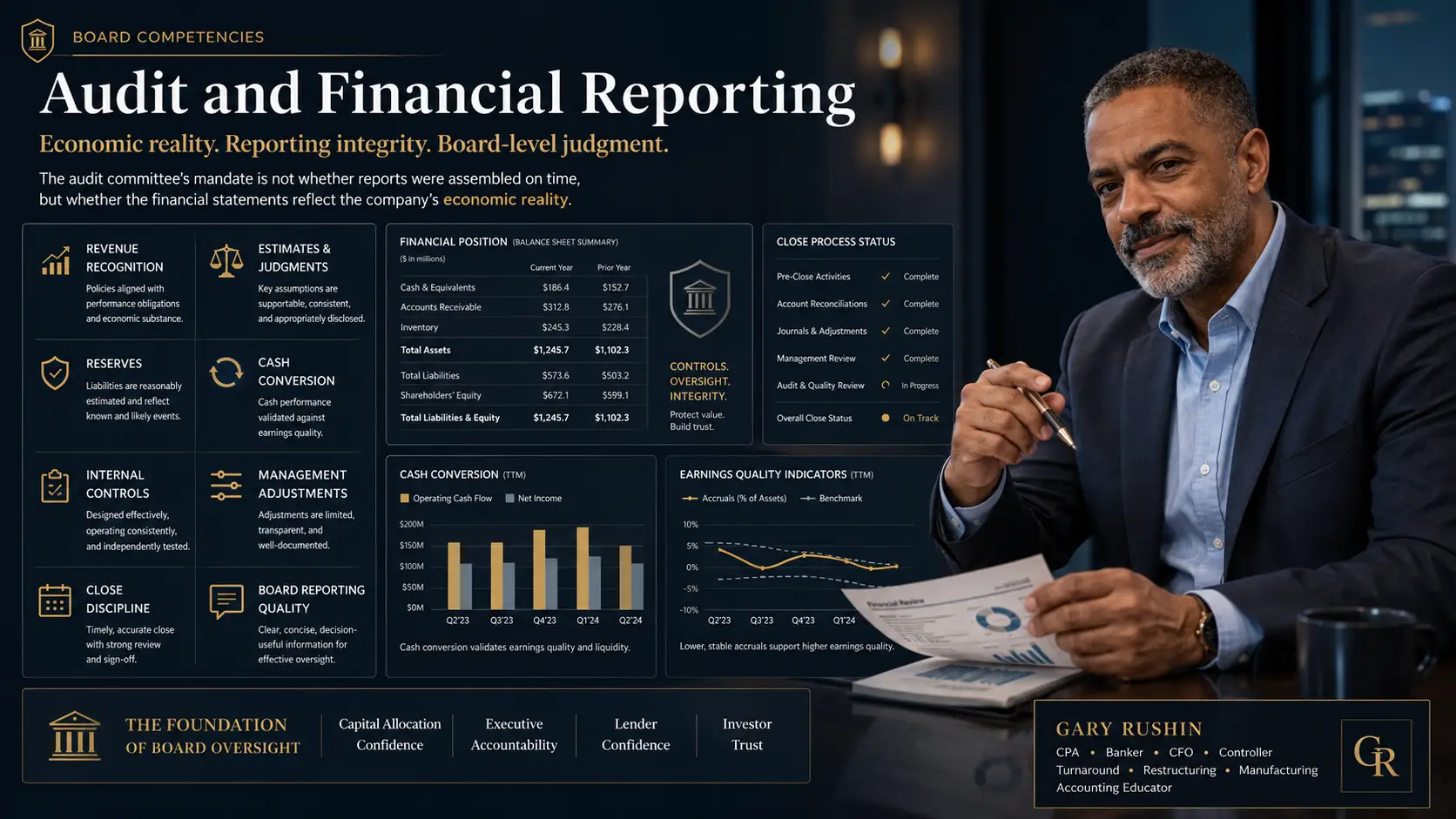
Reliable financial reporting is not merely an accounting requirement. Board Director Qualifications is the foundation of board oversight, capital allocation, executive accountability, lender confidence, and investor trust.
The audit committee must determine whether the financial statements reflect the company’s economic reality—not simply whether the numbers have been assembled and presented on time. That requires attention to revenue recognition, estimates, reserves, cash conversion, internal controls, management adjustments, close discipline, and the quality of information reaching the board.
Gary has the board director qualifications that brings the perspective of a CPA, former commercial and international banker, CFO, controller, turnaround operator, restructuring professional, manufacturer, and accounting educator. Thus, he helps boards connect accounting judgments to operating performance, liquidity, incentives, systems, and risk.
His focus is not limited to whether the company complied with the rules.
It is whether the numbers can be trusted, whether management understands what is driving them, and whether the board is receiving the truth early enough to act.
First, do the financial statements reflect the company’s underlying economic reality?
Next, which estimates, assumptions, or judgments could materially alter reported results?
Moreover, how closely do revenue-recognition policies align with contract economics and actual performance obligations?
At the same time, have management adjustments become routine rather than exceptional?
From a reporting standpoint, does the monthly close process produce timely, complete, and reliable financial information?
Equally important, could material weaknesses signal deeper operating, control, or leadership failures?
From a cash-flow perspective, how well does the board understand the company’s cash-conversion cycle?
In addition, are reconciliations, cutoffs, reserves, and account analyses completed consistently?
Likewise, does management reporting reconcile with the audited financial statements?
When reviewing performance, do non-GAAP measures clarify results or obscure them?
Furthermore, is the external auditor receiving complete, accurate, and candid information?
From an oversight perspective, how directly does the audit committee hear from the controller, internal audit team, and other finance leaders?
As the business evolves, are accounting policies keeping pace with changes in contracts, products, technology, and business models?
From an incentive standpoint, could compensation plans be influencing accounting judgments?
Finally, are directors receiving reliable information early enough to act effectively?
Gary’s experience includes:
Gary helps boards work toward:
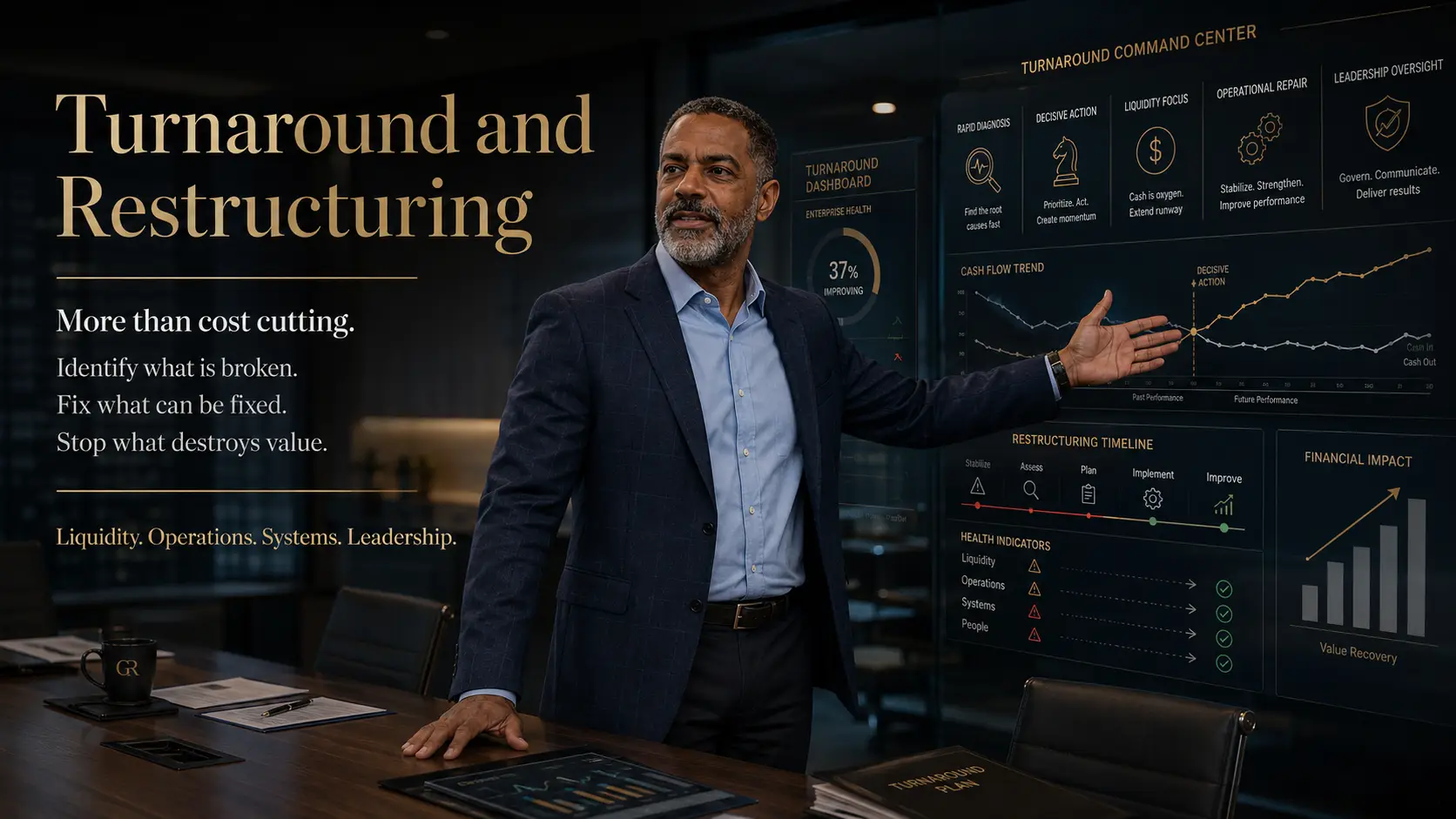
A turnaround requires more than cost-cutting.
Board director qualifications require a rapid determination of what is broken, what can be fixed, what must be stopped, and how long the company has to act.
Gary brings the perspective of a turnaround operator, CFO, banker, restructuring professional, manufacturer, and executive who has worked within businesses where financial reporting, liquidity, operations, systems, and leadership had to be addressed simultaneously. Addressing special situations is critical
First, what is the company’s true liquidity runway under both the base case and downside case?
Next, which problems are temporary, and which reflect deeper structural weakness?
Moreover, what must management stabilize within the next 30, 60, and 90 days?
At the same time, which customers, products, locations, or business units are destroying value?
From a leadership perspective, is the current management team capable of executing the turnaround?
In addition, what information should the board receive weekly rather than quarterly?
Operationally, which payments, projects, or investments should be stopped immediately?
From a liquidity standpoint, which assets can be sold or otherwise monetized?
Equally important, which stakeholders must be engaged first?
Furthermore, are lenders, suppliers, employees, and customers receiving clear and consistent information?
Strategically, what is the minimum viable operating model needed to preserve the business?
Before formal action is taken, can the company be repaired outside a court-led restructuring process?
Going forward, which milestones should trigger a change in strategy, capital plan, or leadership?
If the base case fails, what contingency plans are ready for immediate use?
Finally, is management protecting the institution, or merely defending past decisions?
Gary’s experience includes:
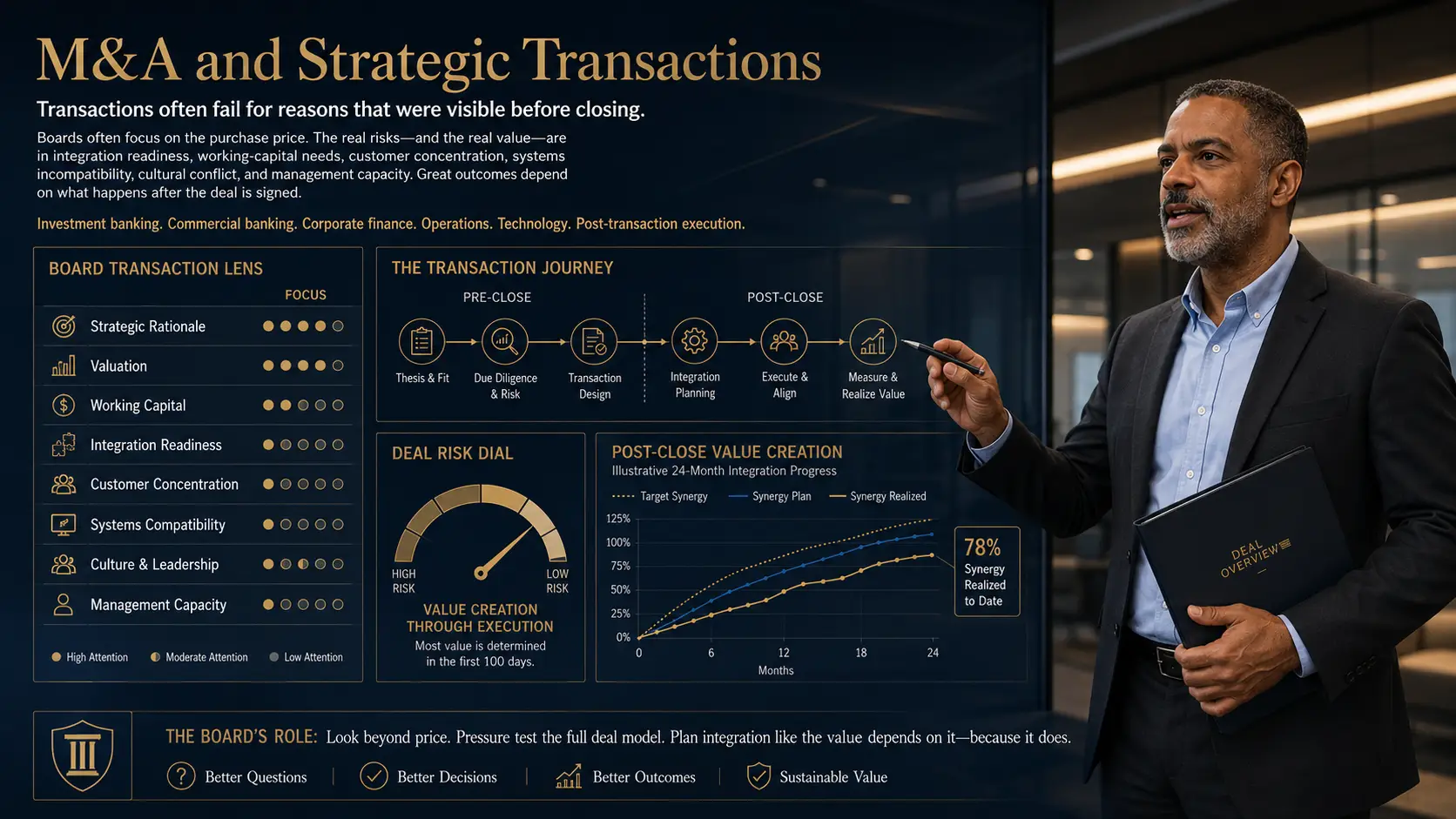
Transactions often fail for reasons that were visible long before closing. While boards and management teams frequently focus on purchase price, valuation, and deal structure, they may give less attention to integration readiness, working-capital demands, customer concentration, systems incompatibility, cultural conflict, and management capacity. Consequently, a transaction that appears compelling on paper can quickly destroy value when the organization lacks the resources, systems, leadership, or discipline required for execution.
Therefore, effective transaction oversight must extend beyond approving the economics of the deal. It must also determine whether the company can finance, integrate, operate, and govern the combined enterprise after closing. Gary brings board director qualifications supported by experience in investment banking, commercial banking, corporate finance, financial analysis, operations, technology, and post-transaction execution. As a result, he can help boards evaluate not only whether a transaction is strategically attractive, but also whether management is prepared to achieve the promised synergies, protect liquidity, control integration risk, and deliver lasting shareholder value.
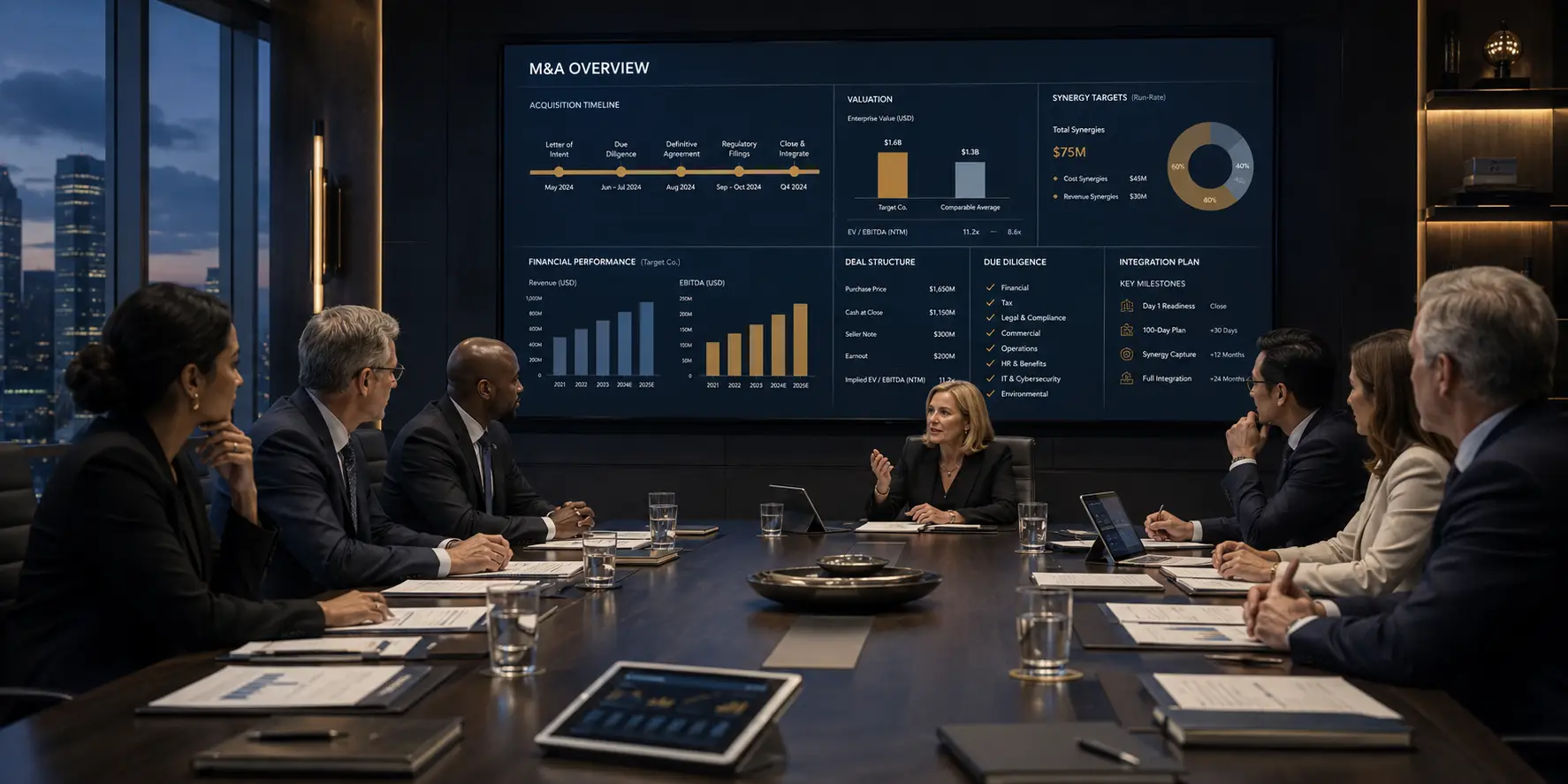
Questions Gary helps boards ask include:
First, what strategic problem does this transaction solve?
Next, why is ownership more valuable than a partnership, licensing agreement, or organic growth?
Moreover, which assumptions drive the valuation?
Equally important, what must be true for the projected synergies to occur?
From a liquidity standpoint, how much cash will the business require after closing?
In addition, what liabilities, commitments, or dependencies may not appear in reported earnings?
From an earnings-quality perspective, are normalized earnings supported by cash flow?
Likewise, how reliable are the target company’s accounting records?
From a concentration-risk perspective, what customer, supplier, employee, or technology dependencies exist?
Operationally, can management integrate the acquired business while continuing to run the existing company?
Furthermore, who is accountable for each integration milestone?
Before approval, what conditions would cause the board to walk away?
After closing, how will the board determine whether the transaction is creating value?
From a people perspective, has management identified the cultural and leadership risks?
Finally, what happens if the expected revenue synergies do not occur?
Gary’s experience includes:
Gary helps boards work toward:
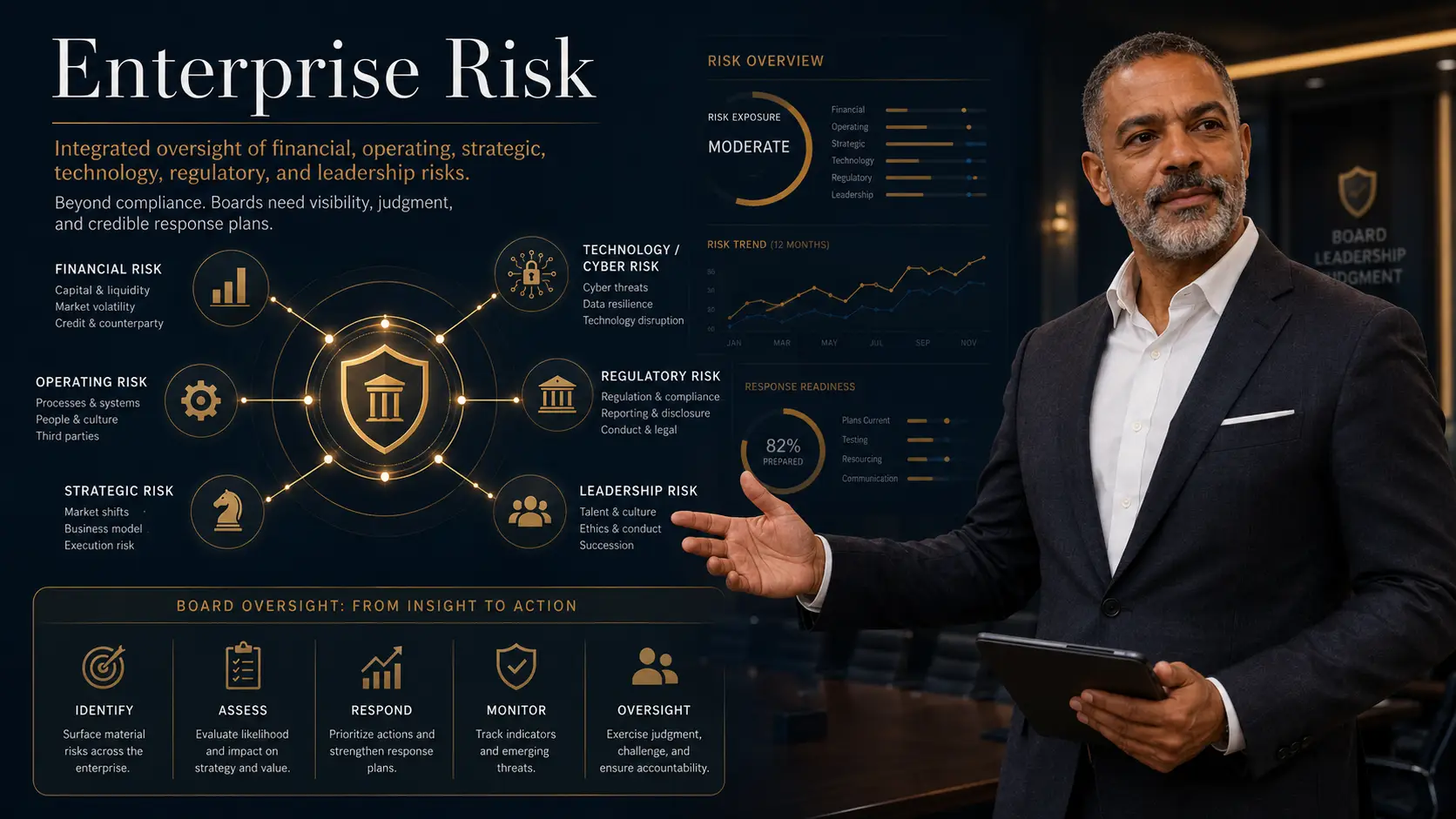
Enterprise risk is not merely a compliance exercise or a color-coded heat map. Instead, it is the disciplined process of identifying threats that could impair strategy, cash flow, reputation, operating capacity, or the company’s license to operate. Moreover, effective oversight requires the board to determine whether management has credible, timely, and actionable response plans.
Accordingly, strong board director qualifications include the ability to connect financial, operating, strategic, technology, regulatory, and leadership risks. Gary brings that integrated perspective. Rather than evaluating each risk in isolation, he helps boards understand how those risks interact, intensify, and ultimately affect enterprise value.
Gary’s relevant experience includes:
First, credit and counterparty-risk analysis across companies, lenders, and financial institutions.
In addition, international banking experience involving sovereign, cross-border, and foreign-market exposure.
Moreover, development of prudential regulatory frameworks for financial institutions and related entities.
From a capital perspective, application of risk-based capital concepts to strengthen financial resilience.
Similarly, turnaround and restructuring assignments involving liquidity, solvency, creditors, and operating performance.
From a control standpoint, internal-control assessment and oversight of financial and reporting risks.
Furthermore, exposure to technology, ERP, cybersecurity, data governance, and systems reliability.
Operationally, experience with manufacturing, supply chains, customers, workforce issues, and execution risk.
At the governance level, design of reporting structures, accountability systems, and board-level information.
Equally important, analysis of financial distress, fraud risk, weak performance, and early warning signs.
In regulated settings, work involving government-related entities, financial institutions, and public-sector environments.
Finally, evaluation of strategic execution risk and management’s ability to deliver promised results.
Gary helps boards work toward:
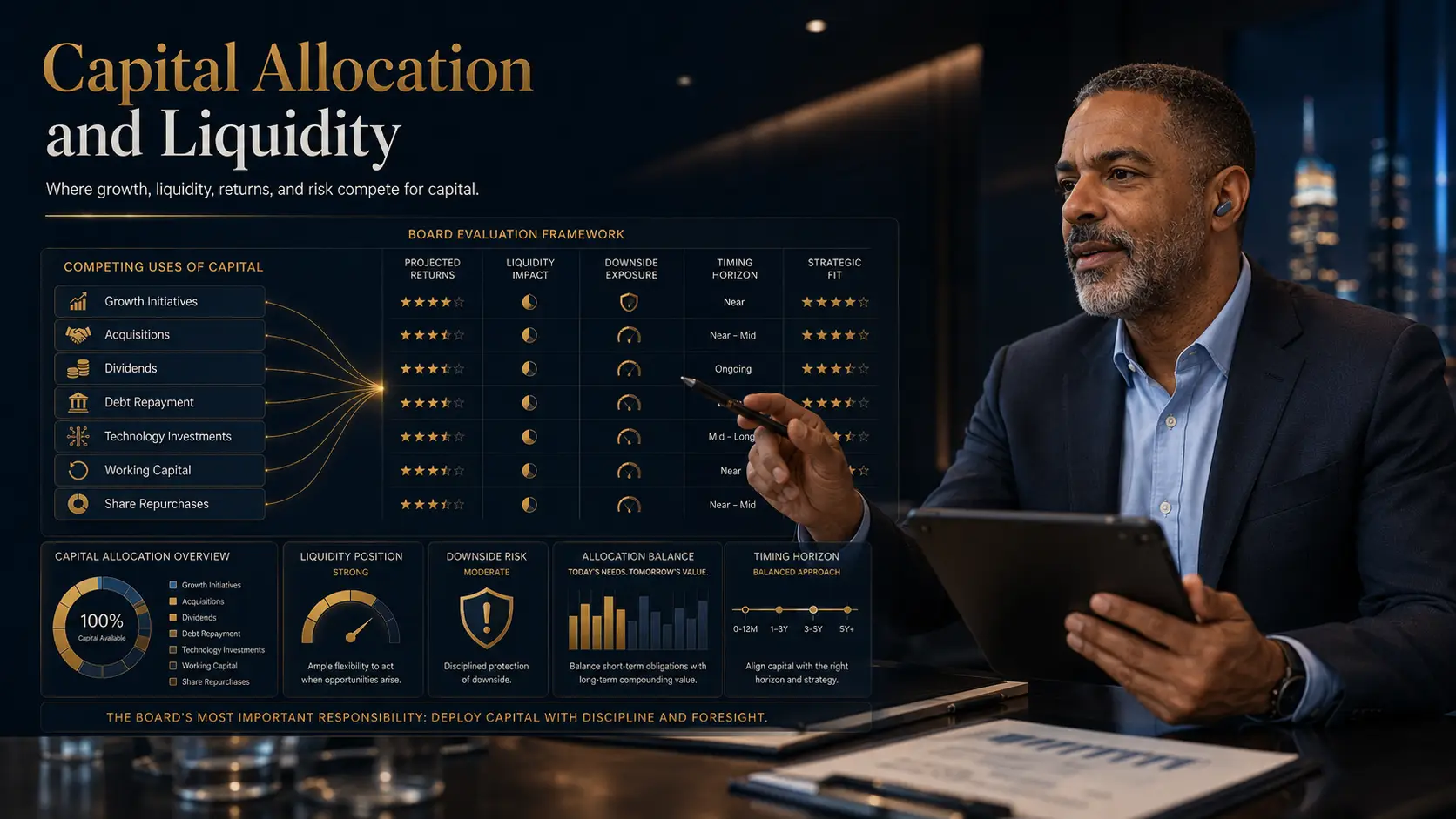
Capital allocation is one of the board’s most consequential responsibilities. Growth initiatives, acquisitions, dividends, debt reduction, technology investments, working capital, and share repurchases all compete for the same limited pool of capital. Therefore, directors must evaluate more than projected returns; they must also consider liquidity consequences, downside exposure, timing, strategic fit, and the company’s capacity to execute.
Gary brings board director qualifications supported by experience in commercial banking, international banking, investment banking, corporate finance, restructuring, and operating leadership. As a result, he can help boards assess whether capital decisions strengthen the enterprise or merely increase risk. Moreover, his perspective connects financing strategy with cash flow, operating realities, stakeholder expectations, and long-term shareholder value.
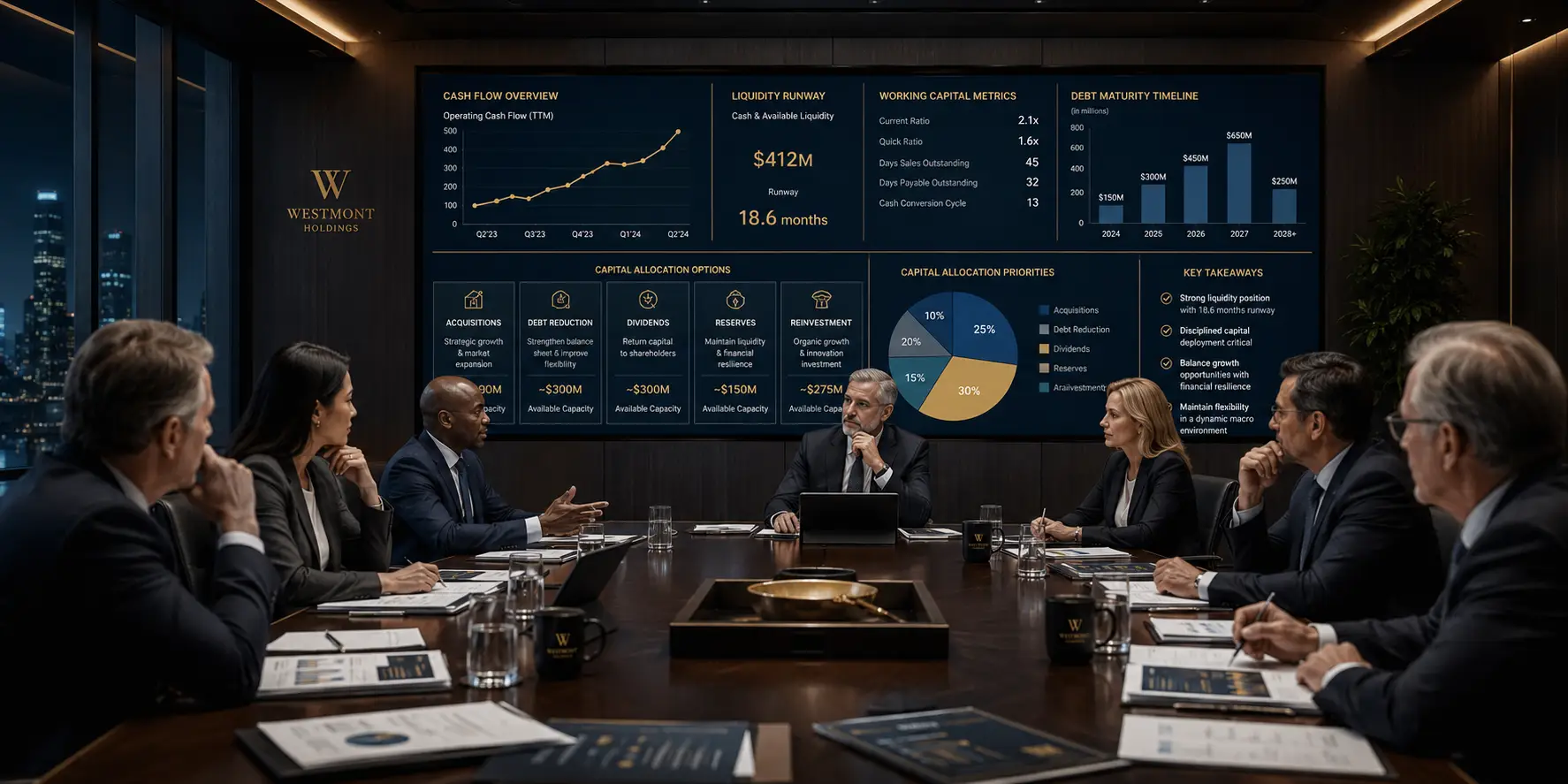
Questions Gary helps boards ask include:
Gary’s experience includes:
Gary helps boards work toward:
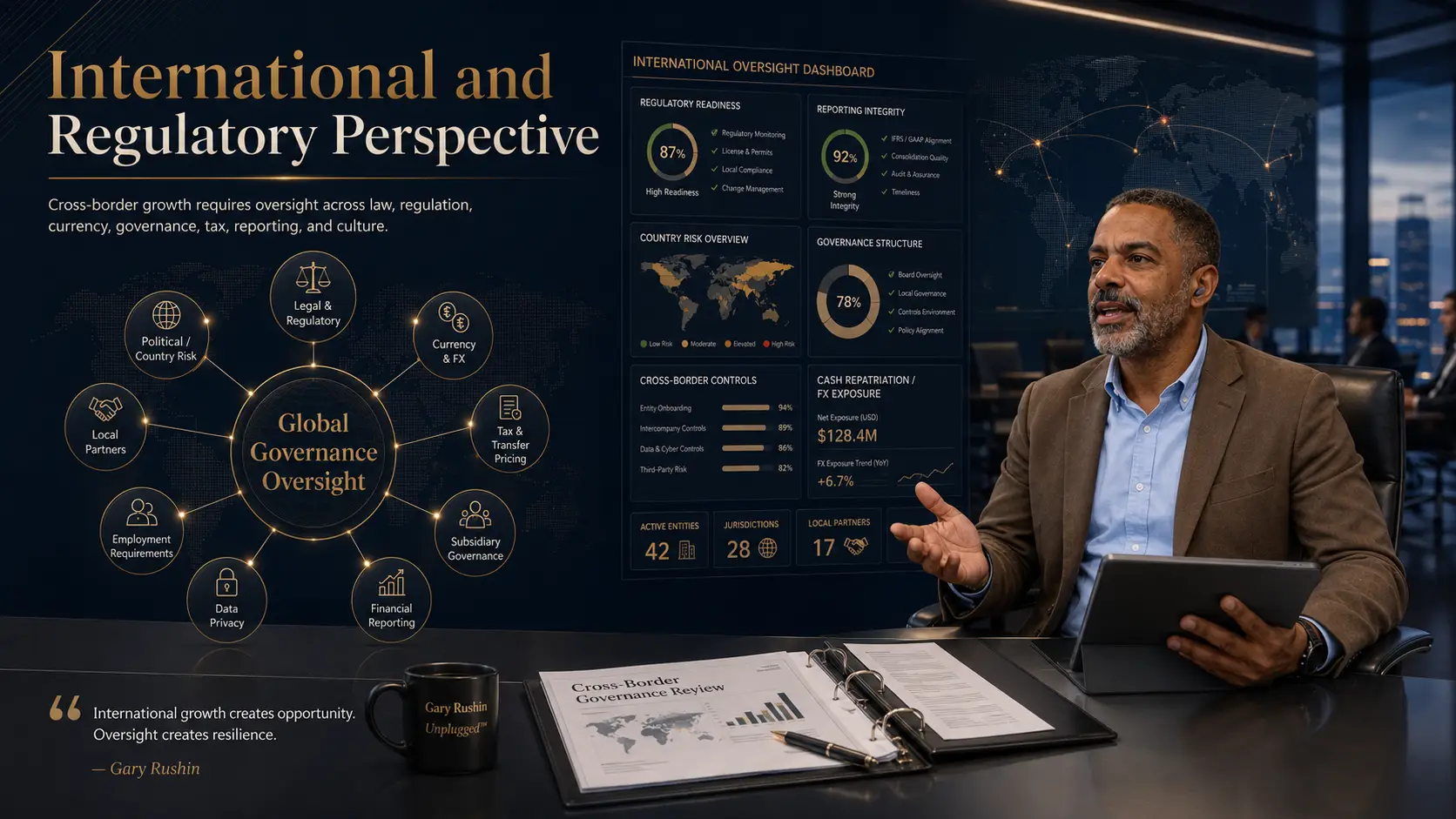
International expansion creates opportunity, but it also introduces legal, regulatory, currency, governance, tax, reporting, and cultural complexity.
Boards must understand that practices acceptable in one jurisdiction may create serious exposure in another. Corporate structures, ownership arrangements, local partners, data rules, employment requirements, financial reporting, and regulatory relationships require active oversight.
Therefore, Gary’s board director qualifications bring international banking, regulatory advisory, cross-border teaching, government advisory, and operating experience.
First, have the technologies essential to the company’s strategy been clearly identified?
Next, have ERP systems produced reliable, timely, and decision-useful information?
Moreover, have business processes been redesigned, or have weak processes merely been automated?
At the same time, have clear owners been assigned responsibility for data quality?
In addition, have technology investments been tied to measurable operating and financial outcomes?
Looking ahead, has the company built systems that can scale without excessive administrative cost?
With artificial intelligence expanding, have the related financial, legal, operating, and reputational risks been assessed?
Furthermore, have models, prompts, training data, outputs, and AI-supported decisions been placed under clear governance?
Likewise, have unauthorized employee uses of artificial intelligence been identified and controlled?
From a risk perspective, have cybersecurity threats been explained in financial and operating terms?
Also, has management identified every system and vendor that is mission-critical?
From a control standpoint, have access rights and segregation of duties been properly designed and tested?
During transformation, has the board established clear warning signs that show when a program is failing?
Equally important, has management fully considered conversion, training, adoption, and change-management risks?
Finally, have technology projects strengthened internal controls, or have they created new control weaknesses?
Gary’s experience includes:
First, executive technology leadership across finance, operations, systems, and enterprise change.
In addition, ERP implementation and transformation in complex operating environments.
More specifically, hands-on work with Microsoft Dynamics 365 and Business Central.
Moreover, financial-system design that improves reporting, control, and decision quality.
At the same time, business-process redesign that removes weak steps before automation begins.
Equally important, data and reporting governance that supports accuracy, access, and accountability.
Furthermore, automation and workflow improvement that reduces delay, rework, and manual error.
From a leadership perspective, CFO experience within technology-driven companies and operating models.
Likewise, practical use of artificial intelligence in financial analysis, education, and decision support.
From a control standpoint, internal-control design around systems, data, access, and reporting.
In evaluating investments, assessment of technology spending from both financial and operational perspectives.
Finally, management of technology-dependent operations where system reliability directly affects performance and risk.
Risks management may underestimate include:
First, poor data quality that weakens reporting, analysis, and decision-making.
In addition, inadequate user adoption that limits the value of new systems and processes.
Moreover, excessive customization that increases cost, complexity, and future upgrade risk.
From a control standpoint, weak access controls that expose systems, data, and transactions to misuse.
Similarly, segregation-of-duties conflicts that allow one person to control incompatible tasks.
At the same time, uncontrolled spreadsheets surrounding the ERP that create hidden errors and reporting gaps.
Furthermore, dependence on third-party implementation firms that reduces internal ownership and knowledge.
From a cybersecurity perspective, vendor and contractor weaknesses that extend risk beyond company systems.
With artificial intelligence, errors, bias, hallucinations, and unsupported conclusions that may influence decisions.
Equally important, confidential information leaking through public AI tools or unapproved platforms.
In addition, weak model governance that leaves AI use without clear testing, review, or accountability.
Operationally, automation of broken processes that makes existing problems faster and harder to detect.
During conversion, failed migrations and incomplete historical data that impair reporting and continuity.
From a people perspective, project fatigue and employee resistance that slow adoption and weaken execution.
Finally, technology spending without measurable business returns that consumes capital without improving performance.
Typical warning signs include:
First, ERP projects repeatedly miss milestones without a credible recovery plan.
In addition, project status reports remain green despite unresolved risks, delays, or control failures.
Moreover, finance continues to rely on offline spreadsheets for core reporting and analysis.
At the same time, users create workarounds outside the approved system.
Similarly, data definitions differ across departments, creating inconsistent reports and conflicting decisions.
From a control perspective, access rights are not reviewed on a regular basis.
Equally concerning, consultants appear to own the transformation instead of accountable executives.
Furthermore, business requirements remain vague, incomplete, or constantly changing.
From a change-management standpoint, training is treated as a late-stage activity.
With cybersecurity, reporting focuses on tools rather than business resilience and recovery.
Likewise, artificial intelligence is deployed without approved use cases, testing, or governance.
Financially, technology costs rise without matching gains in productivity, control, or service.
Operationally, system implementation and process redesign are treated as separate efforts.
In addition, management cannot clearly quantify expected benefits, savings, or performance gains.
Finally, the board learns about delays only after major budget overruns or missed commitments.
Gary helps boards work toward governance outcomes include:
First, technology strategy remains closely aligned with the company’s broader business strategy.
In addition, clear accountability is established for ERP and transformation programs.
Moreover, stronger data governance improves ownership, quality, consistency, and trust.
From a control standpoint, system controls and access management become more reliable.
Likewise, defined AI-use policies create clear limits, review standards, and oversight.
Financially, technology investments are tied to measurable returns and operating results.
At the same time, cybersecurity and third-party-risk reporting becomes more useful to the board.
Operationally, dependence on spreadsheets and manual workarounds is reduced.
As a result, financial and operating information becomes more timely, accurate, and dependable.
Furthermore, technology-program risks are escalated earlier, before delays and costs become severe.
Finally, the company builds technology infrastructure capable of supporting growth, scale, and change.
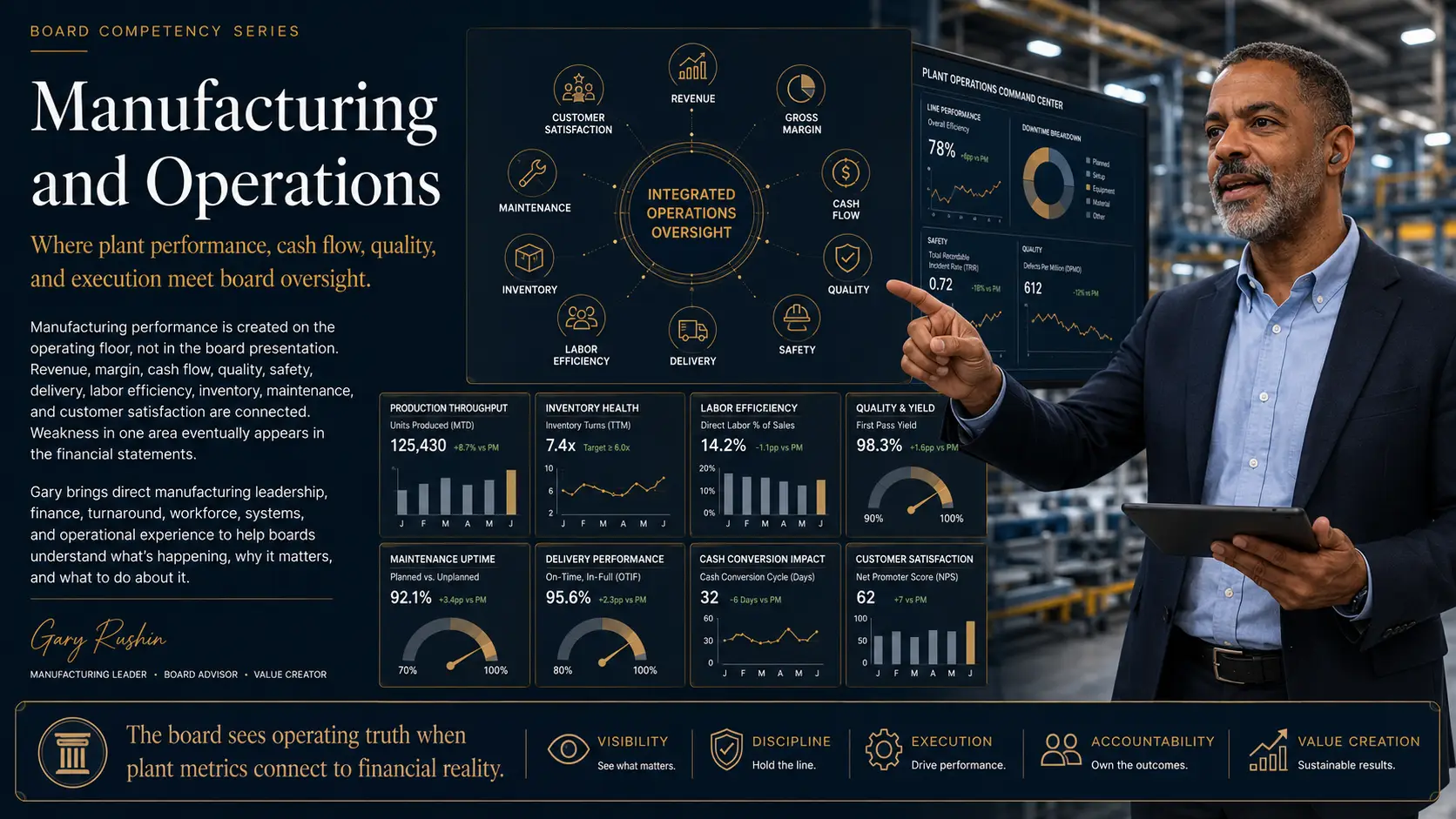
Revenue, margin, cash flow, quality, safety, delivery, labor efficiency, inventory, maintenance, and customer satisfaction are connected. Weakness in one area eventually appears in the financial statements.
As a result, Gary’s background and experience brings board director qualifications brings direct experience in manufacturing leadership, finance, turnaround, workforce, systems, and operations.

Questions Gary helps boards ask include:
First, where is operating performance created, and where is it being lost?
Next, which products, customers, facilities, or processes generate acceptable returns?
Moreover, are standard costs aligned with actual operating conditions?
From an efficiency standpoint, what is driving scrap, rework, overtime, downtime, and expedited freight?
In addition, does inventory support demand, or is it masking weak planning?
Equally important, are quality problems isolated, or do they reflect deeper systemic issues?
From a maintenance perspective, is the company acting preventively or reacting after failure?
Likewise, how reliable are production, capacity, and demand forecasts?
Operationally, does management understand constraint economics and its effect on throughput?
Furthermore, which operating metrics provide early warning of future financial performance?
From a workforce perspective, are labor incentives aligned with quality, safety, throughput, and cash flow?
As the company grows, can it scale without losing control, discipline, or service quality?
From a concentration-risk perspective, does the board understand customer and supplier dependencies?
Financially, are operational improvements producing stronger cash flow?
Finally, is the company investing enough in equipment, people, systems, and preventive maintenance?
Gary’s experience includes:
Gary helps boards work toward:
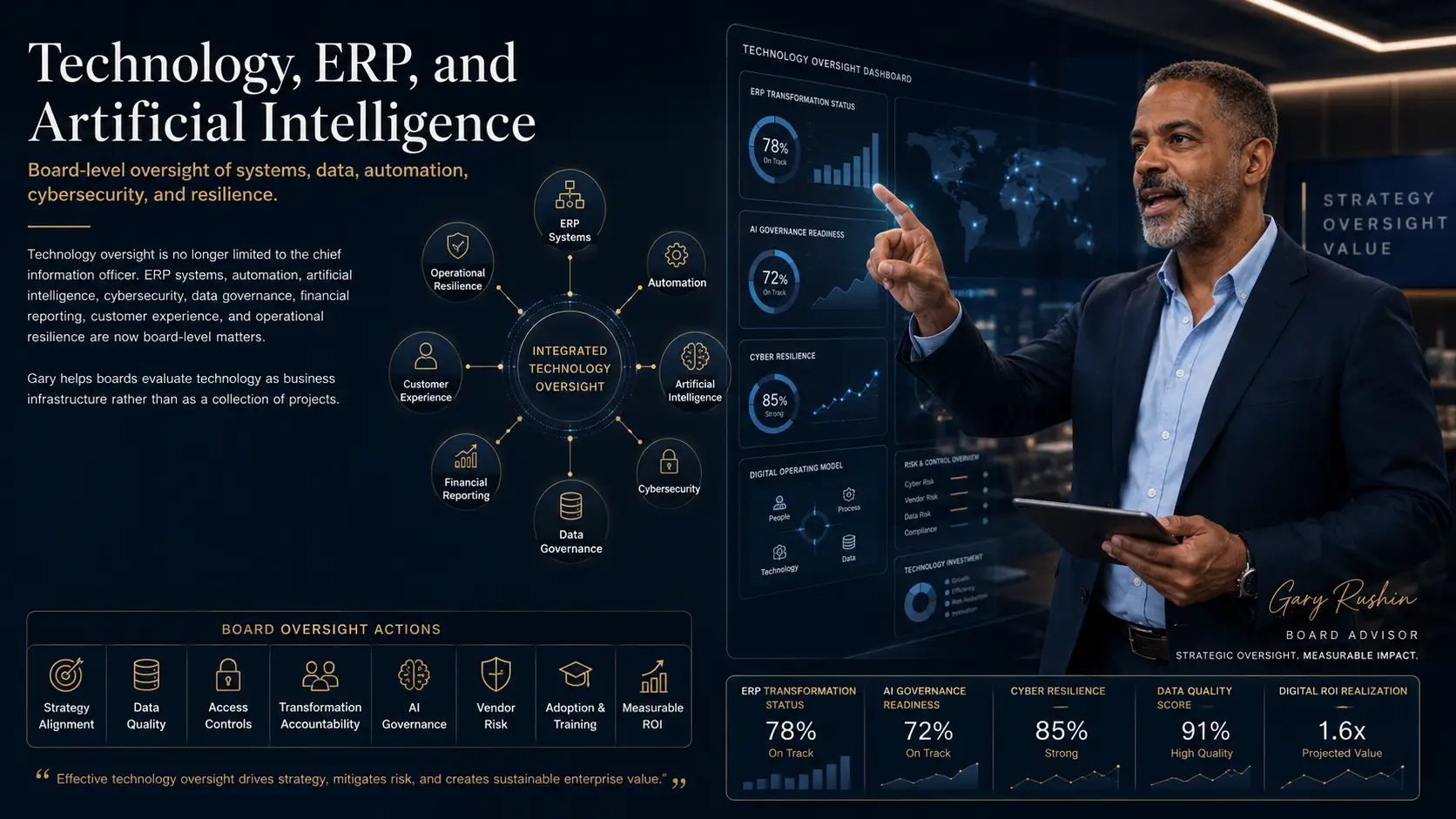
Technology oversight is no longer limited to the chief information officer. Boards must control technology oversight.
ERP systems, automation, artificial intelligence, cybersecurity, data governance, financial reporting, customer experience, and operational resilience are now board-level matters.
Thus, Gary’s board director qualifications combine financial, operating, technology, systems, and governance experience. He helps boards evaluate technology as business infrastructure rather than as a collection of projects.
Questions Gary helps boards ask include:
First, which technologies are essential to the company’s strategy?
Next, does the ERP system produce reliable, timely, and decision-useful information?
Moreover, are business processes being redesigned, or are weak processes merely being automated?
From a governance standpoint, who owns data quality and remains accountable for it?
In addition, are technology investments tied to measurable operating and financial outcomes?
As the company grows, can it scale without adding excessive administrative cost?
With artificial intelligence expanding, what financial, legal, operating, and reputational risks may arise?
Furthermore, how are models, prompts, training data, outputs, and AI-supported decisions governed?
At the same time, where are employees using unauthorized or unapproved AI tools?
From a risk perspective, are cybersecurity threats understood in financial and operating terms?
Equally important, does management know which systems and vendors are mission-critical?
From a control standpoint, are access rights and segregation of duties properly designed and tested?
During transformation, how will the board recognize that a major program is beginning to fail?
Likewise, is management underestimating conversion, training, adoption, and change-management risks?
Finally, are technology projects strengthening internal controls or creating new control weaknesses?
Gary’s experience includes:
Gary helps boards work toward:
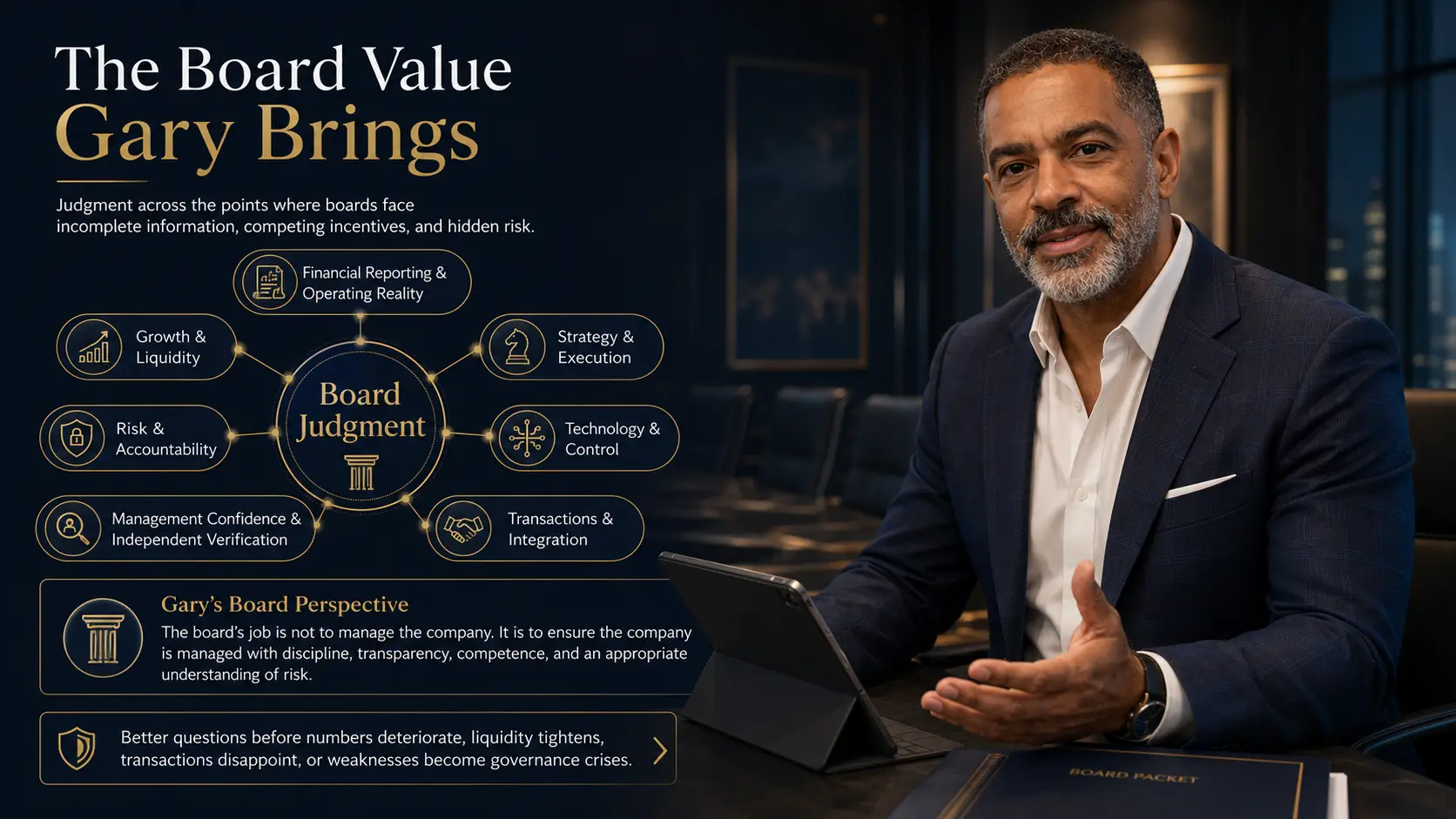
Overall, Gary’s experience supports a broad range of board director qualifications and committee responsibilities. In particular, his background connects financial judgment, operating discipline, technology oversight, transaction experience, and crisis leadership.
First, strengthening financial reporting integrity and board confidence in reported results.
In addition, reviewing critical accounting estimates, assumptions, and management judgments.
Moreover, assessing internal controls and identifying weaknesses before they become larger failures.
From an assurance standpoint, overseeing the external auditor and the quality of the audit process.
Likewise, supporting an effective and independent internal audit function.
Equally important, evaluating earnings quality and the sustainability of reported performance.
From a cash-flow perspective, improving transparency around liquidity, working capital, and cash conversion.
Finally, supporting succession planning for the CFO, controller, and other senior finance leaders.
First, strengthening enterprise-risk management across financial, operating, strategic, and technology risks.
In addition, overseeing liquidity, capital, and solvency risk.
Moreover, assessing cybersecurity, data, artificial intelligence, and broader technology exposure.
From a compliance perspective, monitoring regulatory and legal risks.
Likewise, evaluating international, sovereign, and cross-border exposure.
Equally important, testing the company’s readiness for financial, operating, or reputational crises.
Finally, defining risk appetite, escalation rules, and clear accountability.
First, guiding capital allocation across growth, acquisitions, debt reduction, dividends, and reserves.
In addition, strengthening liquidity planning under normal and stressed conditions.
Moreover, assessing debt capacity and the company’s ability to support future obligations.
From a funding perspective, evaluating refinancing options, timing, and covenant risk.
Likewise, testing expected investment returns against realistic operating assumptions.
Operationally, improving working-capital discipline across receivables, inventory, and payables.
Furthermore, reviewing shareholder distributions within the company’s wider capital needs.
Finally, supporting strategic financing decisions that protect long-term enterprise value.
First, evaluating mergers and acquisitions against the company’s strategy and capacity to execute.
In addition, reviewing divestitures and other portfolio-shaping decisions.
Moreover, assessing strategic investments and partnership alternatives.
From a financing standpoint, reviewing transaction funding and post-closing liquidity needs.
Likewise, strengthening financial, operational, technology, and commercial due diligence.
After closing, overseeing integration plans, milestones, and management accountability.
Furthermore, reviewing the performance and strategic fit of the business portfolio.
Finally, measuring whether completed transactions are delivering the promised value.
First, overseeing ERP transformation as a business and governance program.
In addition, strengthening data ownership, quality, access, and reporting standards.
Moreover, establishing clear oversight for artificial intelligence use and model risk.
From a security perspective, monitoring cybersecurity threats and business resilience.
Likewise, ensuring that critical systems remain reliable and recoverable.
Operationally, supporting automation that improves controls, speed, and efficiency.
Financially, testing whether technology investments produce measurable returns.
Finally, guiding digital operating models that can support growth and scale.
First, providing oversight during turnarounds and periods of severe underperformance.
In addition, evaluating restructuring options and stakeholder consequences.
Moreover, guiding the board through liquidity crises and covenant pressure.
From a leadership perspective, assessing management transitions and executive capability.
Likewise, reviewing strategic alternatives when the existing plan is no longer credible.
Where appropriate, evaluating asset sales and other sources of liquidity.
Furthermore, supporting lender negotiations and creditor communications.
Finally, conducting an independent review of performance, forecasts, and management claims.