BOARD COMPETENCIES

Judgment at the Intersection of Finance, Risk, Strategy, Technology, and Operations

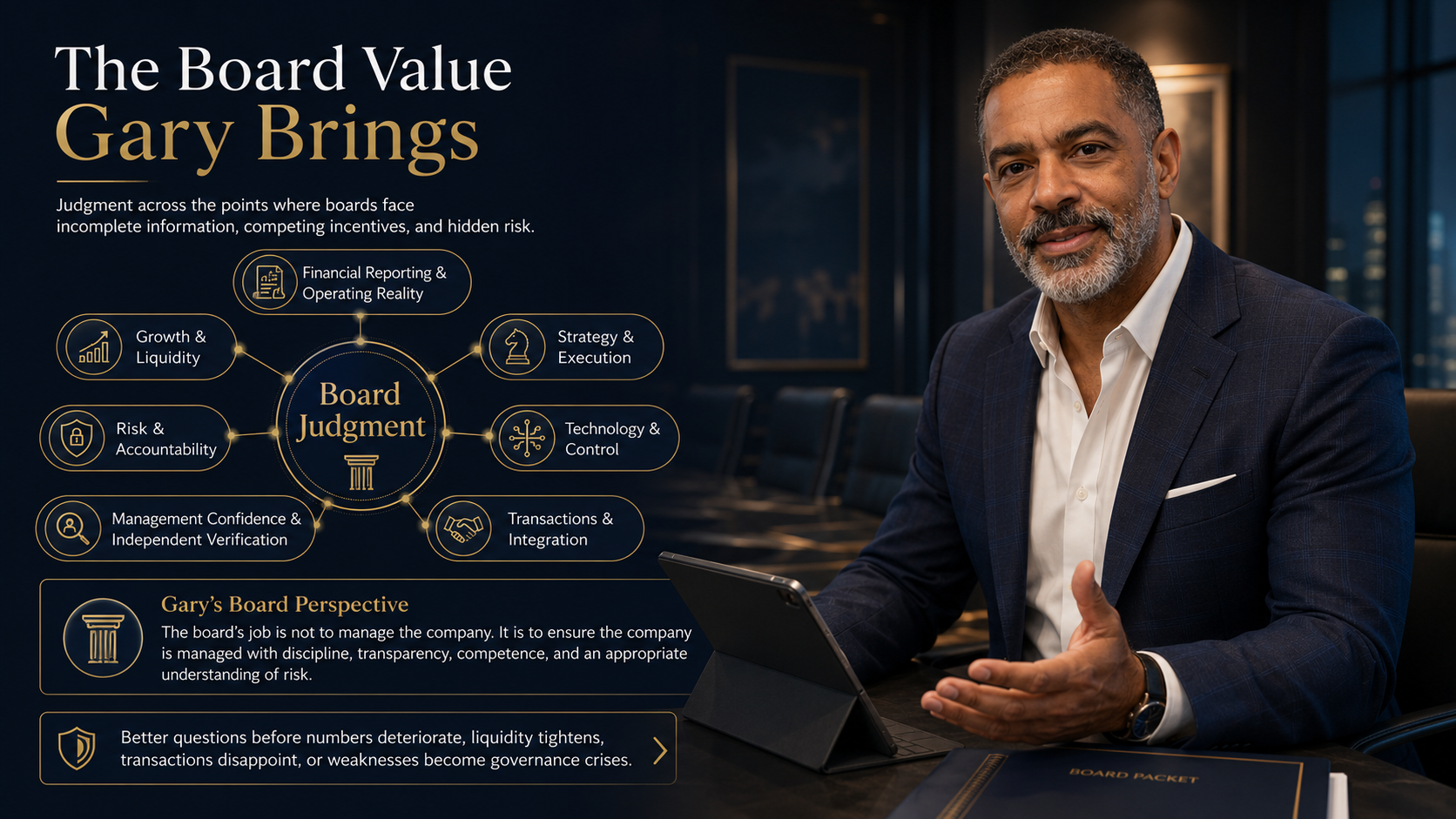
Boards do not need another director who can simply review a presentation.

They need directors who know where to challenge assumptions, when to press for evidence, and how to distinguish a temporary operating problem from a structural failure.

Gary Rushin brings a rare combination of experience across public accounting, commercial and international banking, investment banking, corporate finance, manufacturing, technology, restructuring, regulatory advisory, and executive leadership.

His board contribution is grounded in a practical question:

“What is the business reality behind the numbers, the narrative, and the strategy?”

Gary Rushin helps boards frame the questions management may not be asking, identify risks that conventional reporting may not reveal, and strengthen governance before problems become crises. Gary Rushin has audit committee qualifications that supports his ability to be a risk committee director and finance committee director. And he brings technology governance experience.
BOARD COMPETENCY AREAS

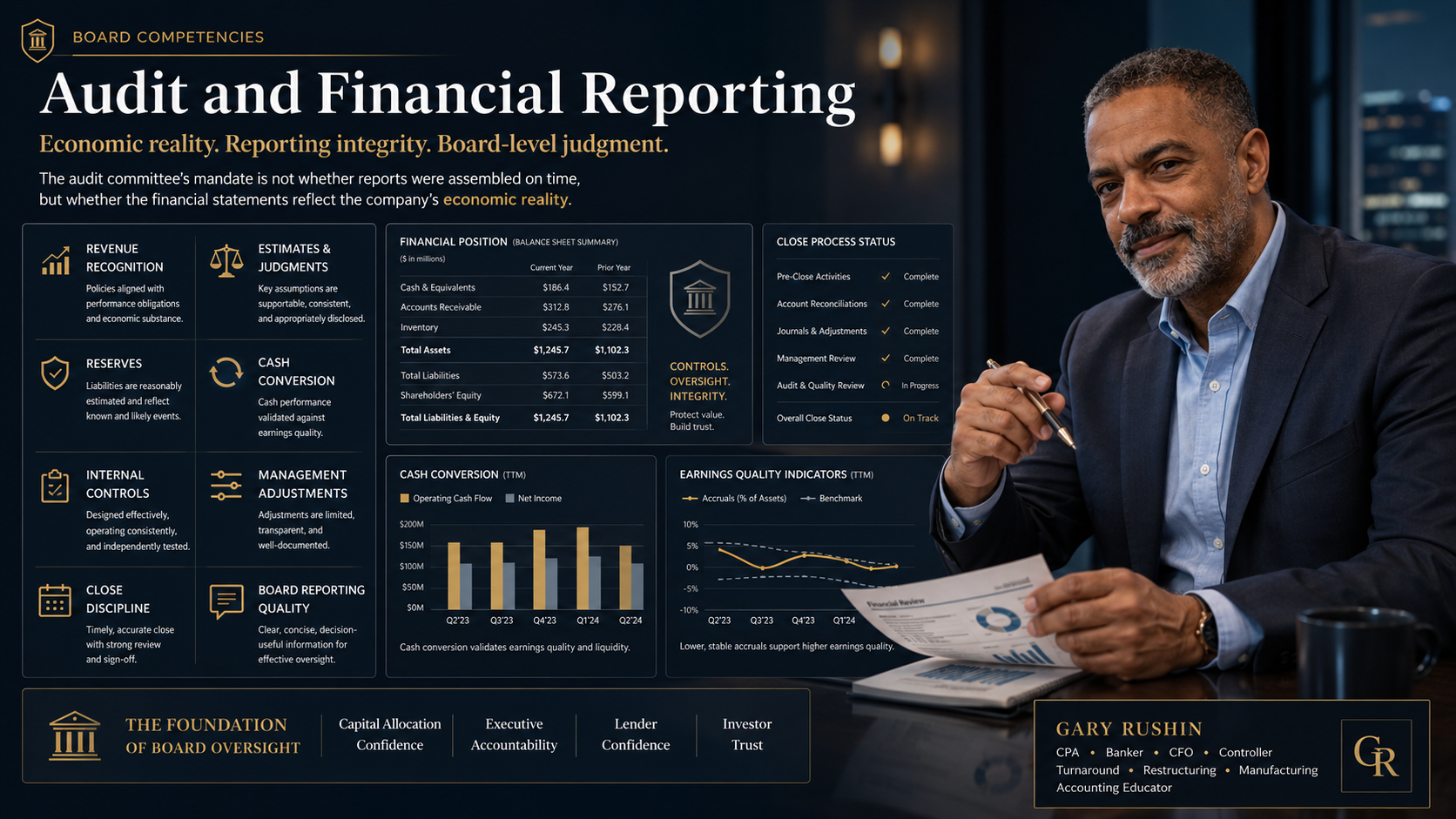
Audit and Financial Reporting

Reliable financial reporting is not merely an accounting requirement. It is the foundation of board oversight, capital allocation, executive accountability, lender confidence, and investor trust.

The audit committee must determine whether the financial statements reflect the company’s economic reality—not simply whether the numbers have been assembled and presented on time. That requires attention to revenue recognition, estimates, reserves, cash conversion, internal controls, management adjustments, close discipline, and the quality of information reaching the board.

Gary brings the perspective of a CPA, former commercial and international banker, CFO, controller, turnaround operator, restructuring professional, manufacturer, and accounting educator. He helps boards connect accounting judgments to operating performance, liquidity, incentives, systems, and risk.

His focus is not limited to whether the company complied with the rules.

It is whether the numbers can be trusted, whether management understands what is driving them, and whether the board is receiving the truth early enough to act.

Questions Gary Helps Boards Ask

  • Do the financial statements reflect the company’s underlying economic reality?
  • Which estimates, assumptions, and judgments could materially change reported results?
  • Are revenue-recognition policies aligned with contract economics and actual performance obligations?
  • Are management adjustments becoming routine rather than exceptional?
  • Does the monthly close process support timely, complete, and reliable reporting?
  • Are material weaknesses symptoms of deeper operating or leadership failures?
  • Does the board understand the company’s cash-conversion cycle?
  • Are reconciliations, cutoffs, reserves, and account analyses being completed consistently?
  • Is management reporting aligned with the audited financial statements?
  • Are non-GAAP measures clarifying performance or obscuring it?
  • Is the external auditor receiving complete and candid information?
  • Does the audit committee hear directly from the controller, internal audit team, and other finance leaders?
  • Are accounting policies keeping pace with changes in contracts, products, technology, and business models?
  • Could incentive compensation be influencing accounting judgments?
  • Are board members receiving information early enough to act?

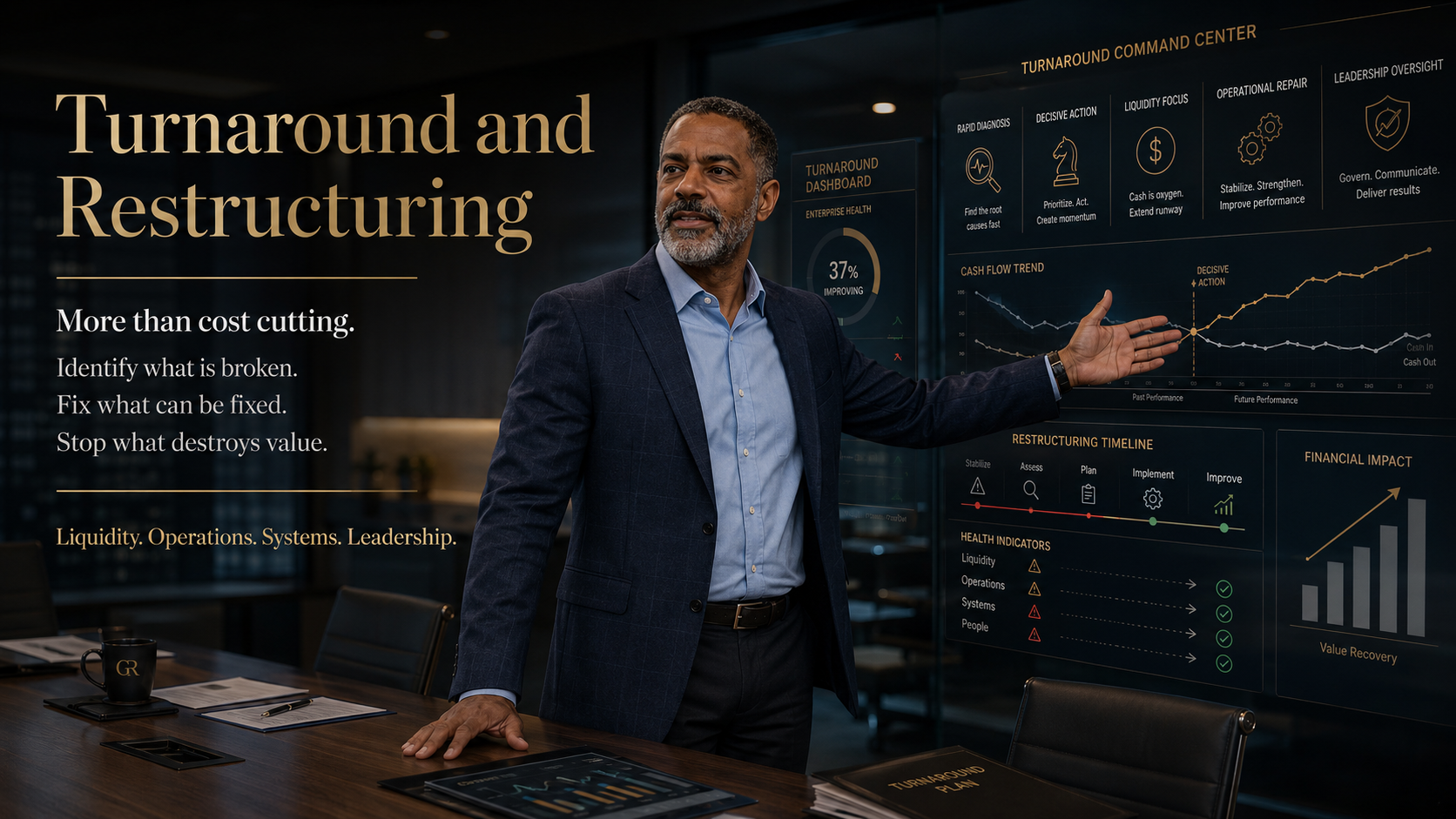
TURNAROUND AND RESTRUCTURING

A turnaround requires more than cost-cutting.

It requires a rapid determination of what is broken, what can be fixed, what must be stopped, and how long the company has to act.

Gary brings the perspective of a turnaround operator, CFO, banker, restructuring professional, manufacturer, and executive who has worked within businesses where financial reporting, liquidity, operations, systems, and leadership had to be addressed simultaneously.

Questions Gary Helps Boards Ask

  • What is the company’s true liquidity runway?
  • Which problems are temporary, and which are structural?
  • What must be stabilized in the next 30, 60, and 90 days?
  • Which customers, products, locations, or business units destroy value?
  • Is management capable of executing the turnaround?
  • What information does the board need weekly rather than quarterly?
  • Which payments, projects, or investments should be stopped immediately?
  • What assets can be monetized?
  • Which stakeholders must be engaged first?
  • Are lenders, suppliers, employees, and customers receiving consistent information?
  • What is the minimum viable operating model?
  • Can the business be fixed outside a formal restructuring process?
  • What milestones should trigger a change in strategy or leadership?
  • What contingency plans exist if the base case fails?
  • Is management protecting the institution or defending past decisions?

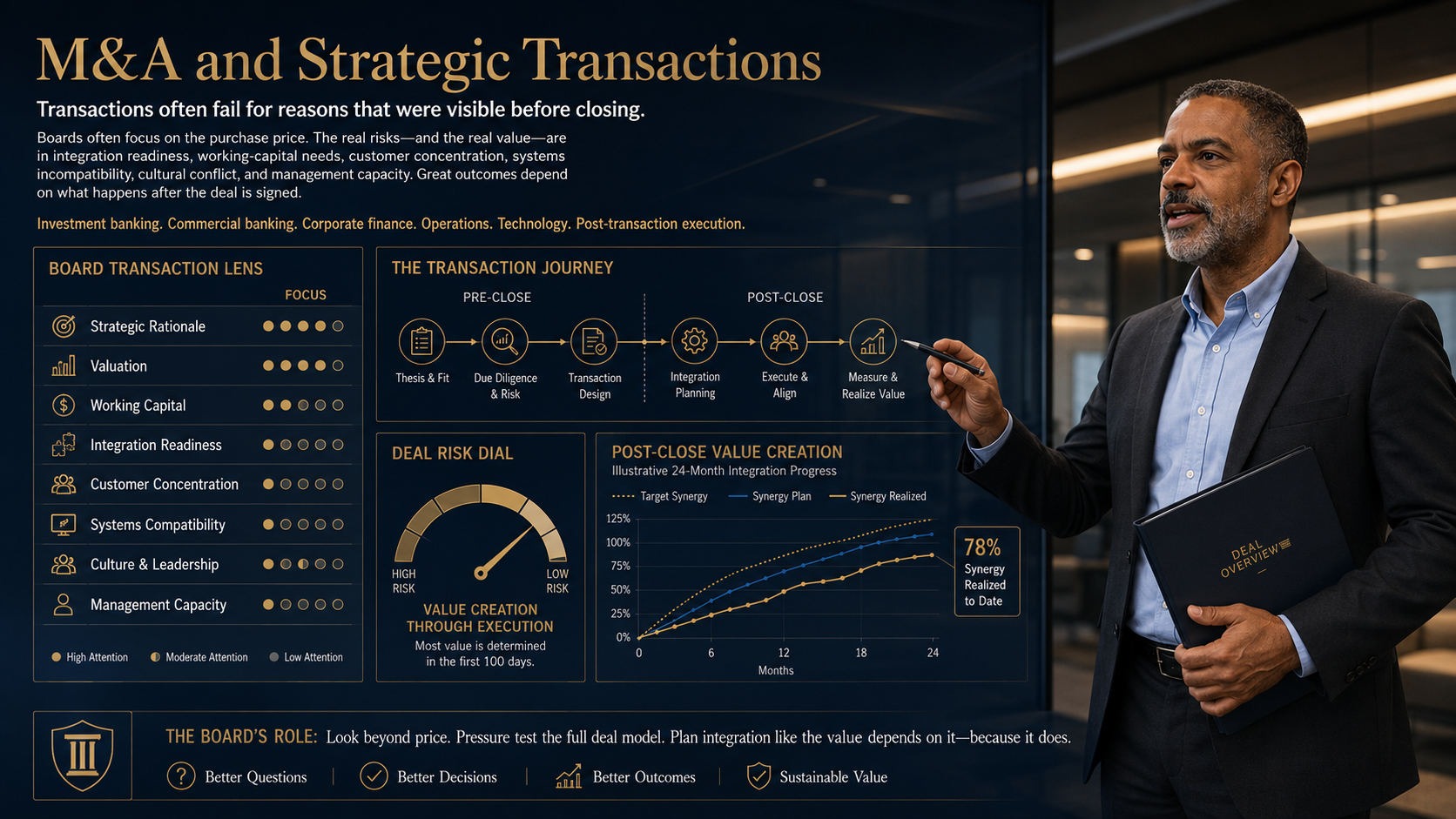
M&A and Strategic Transactions

Transactions often fail for reasons that were visible before closing.

The purchase price may receive extensive attention while integration readiness, working-capital requirements, customer concentration, systems incompatibility, cultural conflict, and management capacity receive far less.

Gary brings experience in investment banking, commercial banking, corporate finance, financial analysis, operations, technology, and post-transaction execution.

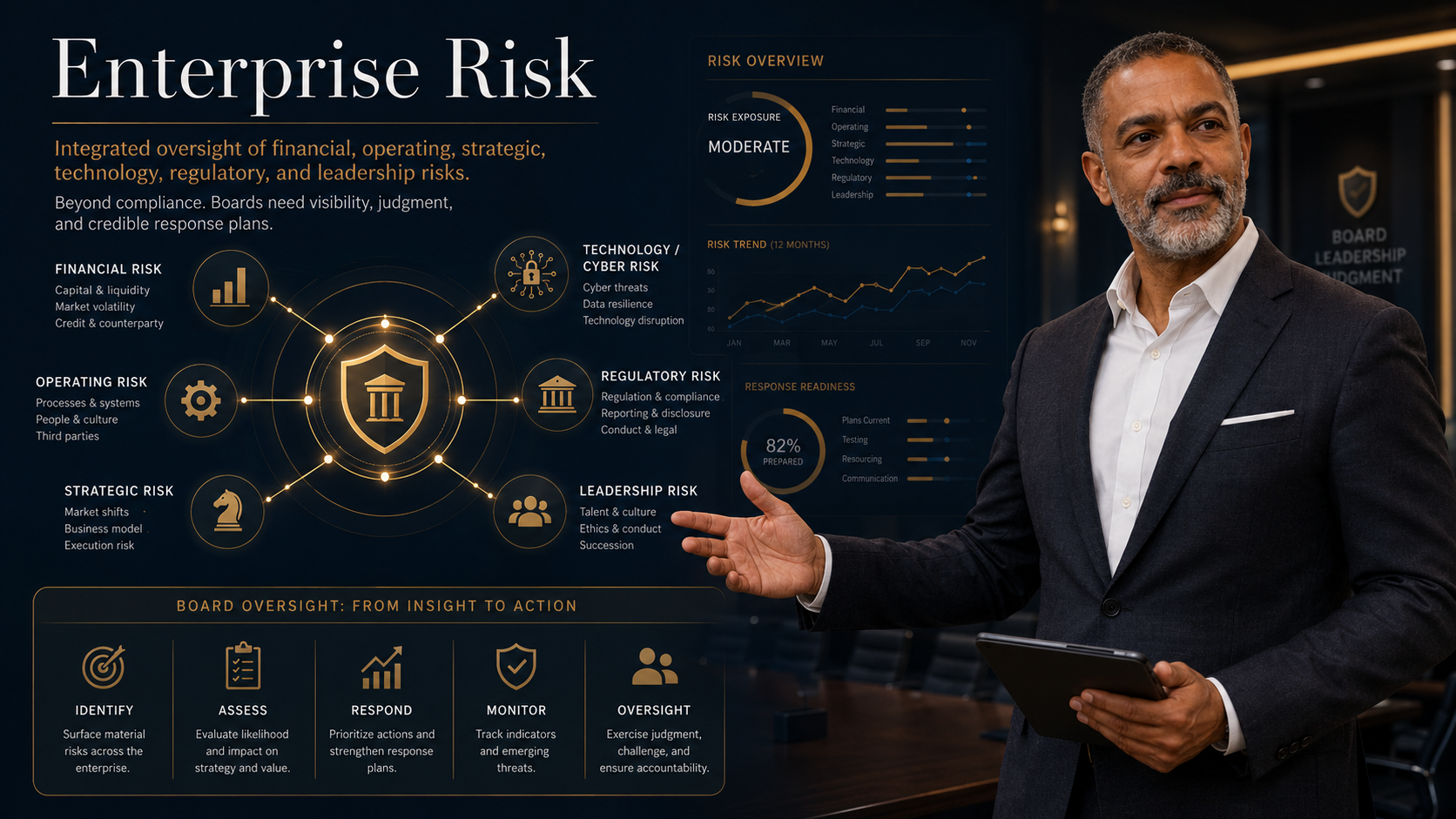
ENTERPRISE RISK

Enterprise risk is not a compliance exercise or a color-coded heat map.

It is the discipline of identifying what can impair the company’s strategy, cash flow, reputation, operating capability, or license to operate—and ensuring that management has credible plans to respond.

Gary helps boards connect financial, operating, strategic, technology, regulatory, and leadership risks rather than evaluate them in isolation.

Questions Gary Helps Boards Ask

  • What assumptions must remain true for the strategy to succeed?
  • Which risks could materially impair liquidity, reputation, or enterprise value?
  • What risks are increasing faster than management’s ability to respond?
  • Who owns each critical risk?
  • How does the company know whether controls are working?
  • Which risks are correlated and could occur at the same time?
  • What is the company’s risk appetite?
  • Which risks are accepted, transferred, mitigated, or avoided?
  • Are key risk indicators reported alongside financial and operating KPIs?
  • Where does the company rely on a single customer, supplier, executive, system, or geography?
  • What scenarios could threaten the company’s ability to continue operating?
  • Are incentives encouraging management to take risks the board has not approved?
  • How quickly can the company detect and escalate a material event?
  • Are business continuity and crisis-response plans operational or merely documented?
  • Does the board receive bad news early?

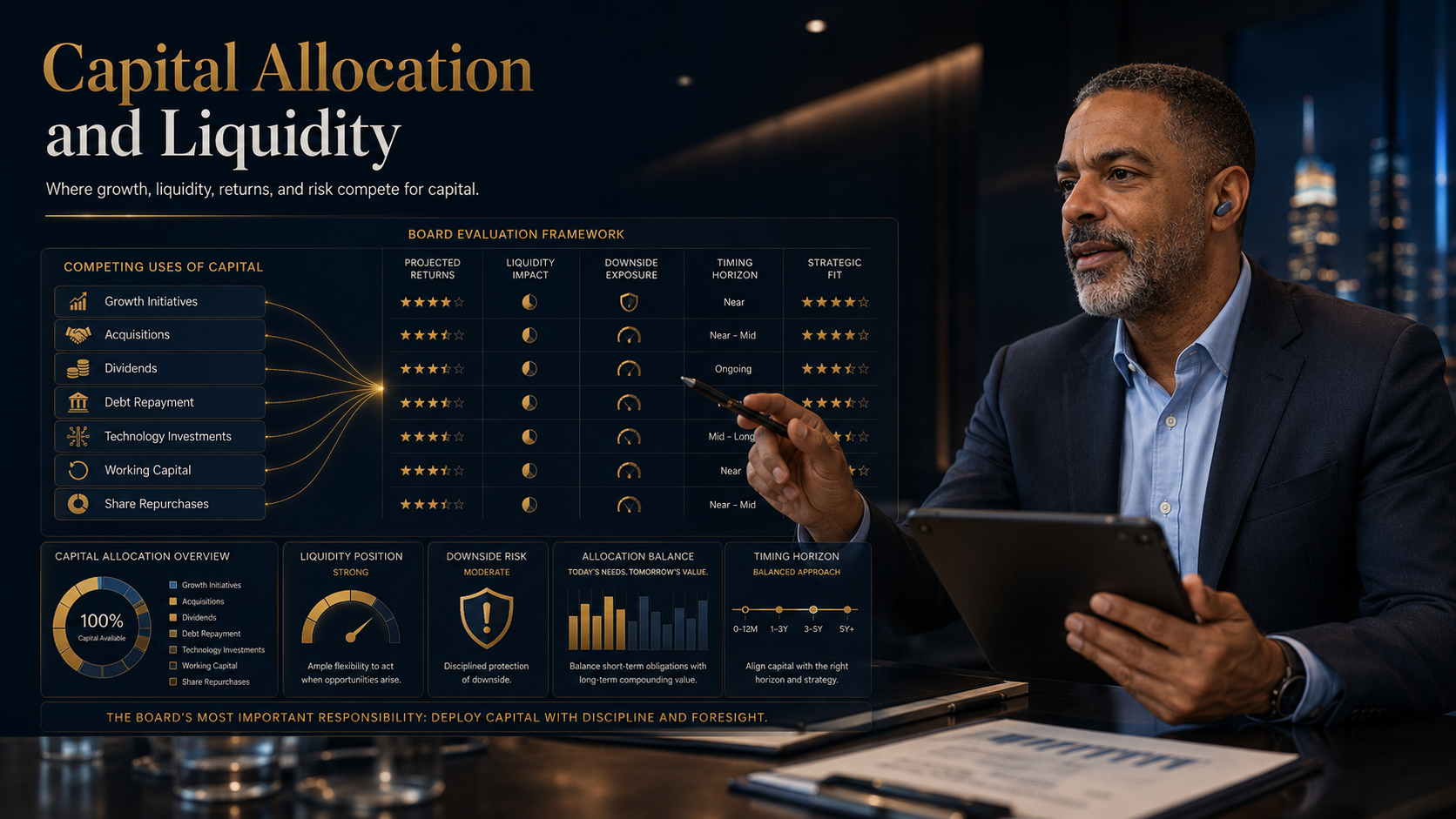
CAPITAL ALLOCATIONS AND LIQUIDITY

Capital allocation is one of the board’s most important responsibilities.

Growth initiatives, acquisitions, dividends, debt repayment, technology investments, working capital, and share repurchases all compete for the same limited pool of capital. A board must understand not only projected returns, but also liquidity consequences, downside exposure, timing, and strategic fit.

Gary brings experience from commercial banking, international banking, investment banking, corporate finance, restructuring, and operating leadership.

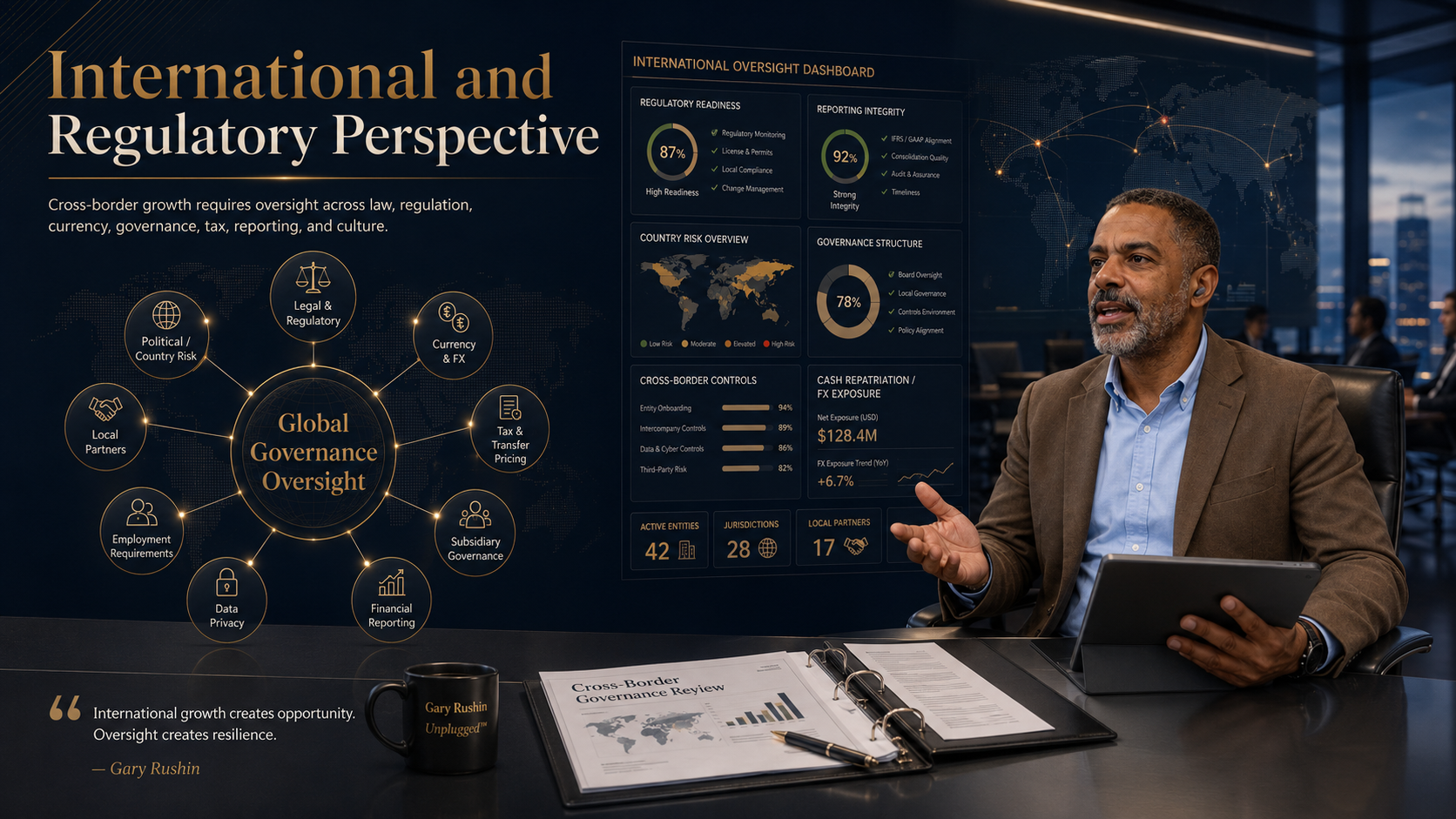
INTERNATIONAL & REGULATORY PERSPECTIVE

International expansion creates opportunity, but it also introduces legal, regulatory, currency, governance, tax, reporting, and cultural complexity.

Boards must understand that practices acceptable in one jurisdiction may create serious exposure in another. Corporate structures, ownership arrangements, local partners, data rules, employment requirements, financial reporting, and regulatory relationships require active oversight.

Gary brings international banking, regulatory advisory, cross-border teaching, government advisory, and operating experience.

Questions Gary Helps Boards Ask

  • Which technologies are essential to the company’s strategy?
  • Does the ERP system produce reliable, timely, and decision-useful information?
  • Are business processes being redesigned or merely automated?
  • Who owns data quality?
  • Are technology investments tied to measurable operating outcomes?
  • Can the company scale without adding excessive administrative cost?
  • What risks arise from artificial intelligence use?
  • How are models, prompts, training data, outputs, and decisions governed?
  • Where are employees using unauthorized AI tools?
  • Are cybersecurity risks understood in financial and operational terms?
  • Does the company know which systems and vendors are mission-critical?
  • Are access controls and segregation of duties properly designed?
  • How will the board know whether a transformation program is failing?
  • Is management underestimating conversion, training, and adoption risk?
  • Are technology projects improving control or creating new control weaknesses?

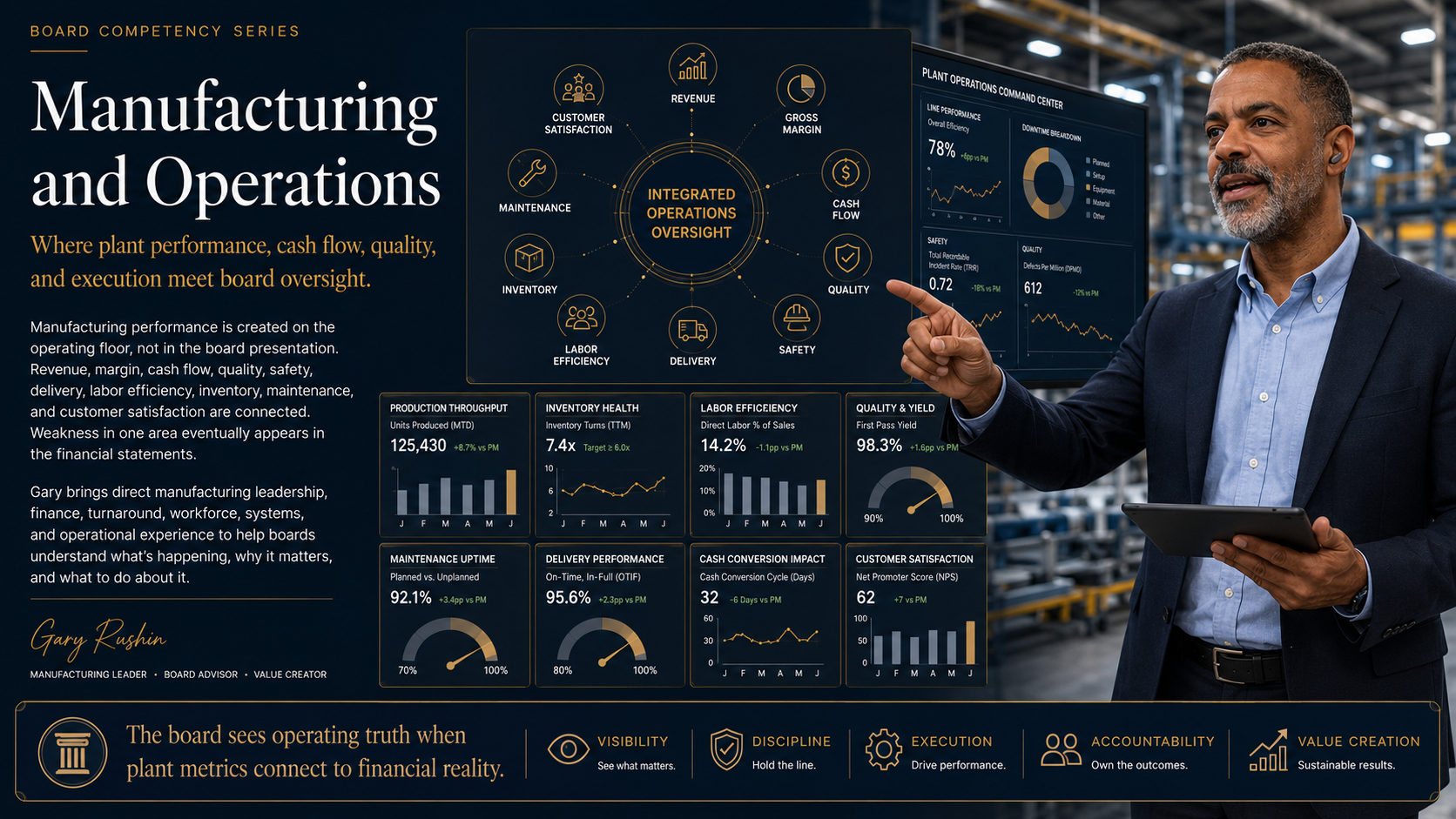
MANUFACTURING AND OPERATIONS

Revenue, margin, cash flow, quality, safety, delivery, labor efficiency, inventory, maintenance, and customer satisfaction are connected. Weakness in one area eventually appears in the financial statements.

Gary brings direct experience in manufacturing leadership, finance, turnaround, workforce, systems, and operations.

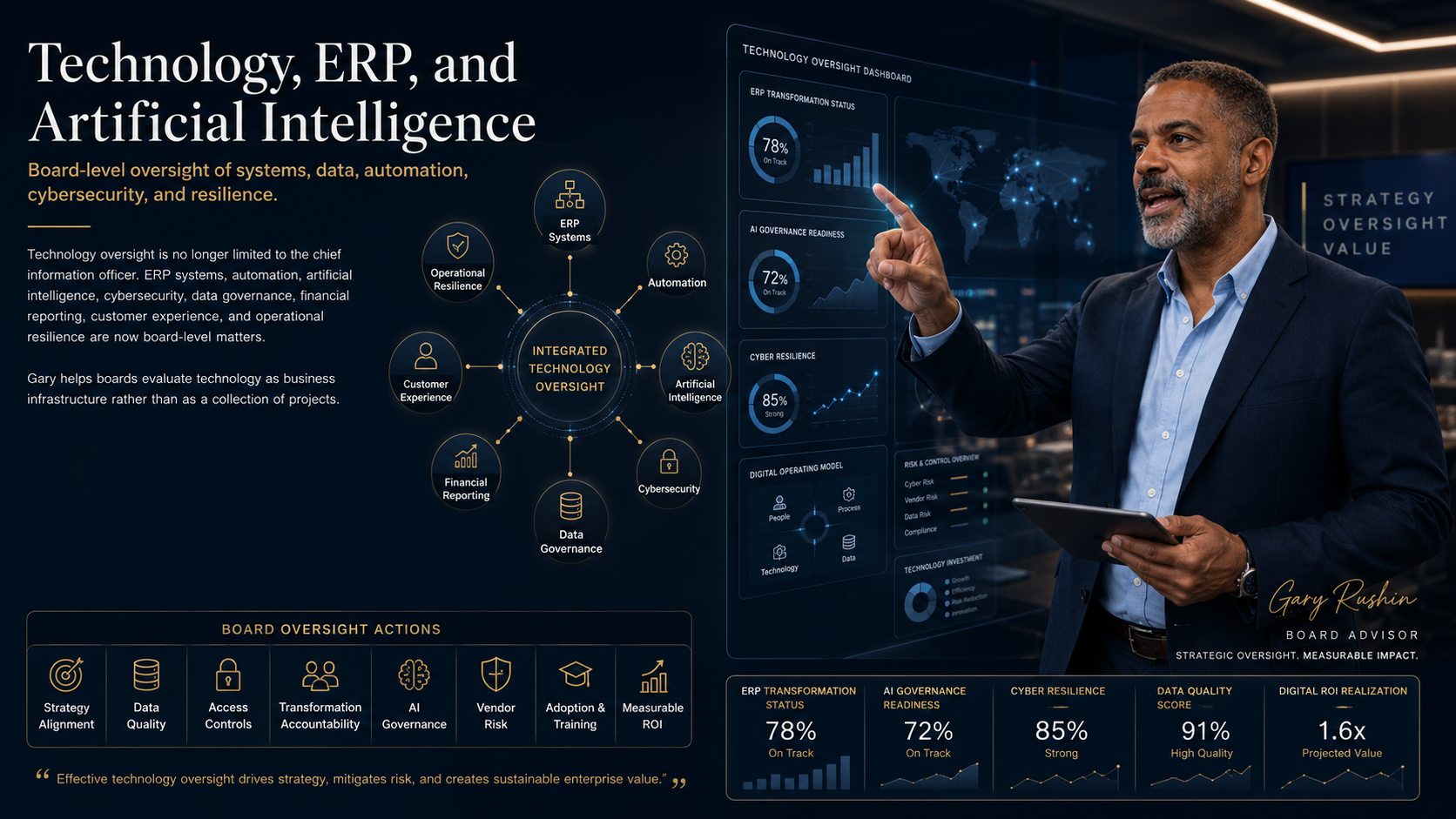
TECHNOLOGY, ERP, & AI

Technology oversight is no longer limited to the chief information officer.

ERP systems, automation, artificial intelligence, cybersecurity, data governance, financial reporting, customer experience, and operational resilience are now board-level matters.

Gary combines financial, operating, technology, systems, and governance experience. He helps boards evaluate technology as business infrastructure rather than as a collection of projects.

Questions Gary Helps Boards Ask

  • Which technologies are essential to the company’s strategy?
  • Does the ERP system produce reliable, timely, and decision-useful information?
  • Are business processes being redesigned or merely automated?
  • Who owns data quality?
  • Are technology investments tied to measurable operating outcomes?
  • Can the company scale without adding excessive administrative cost?
  • What risks arise from artificial intelligence use?
  • How are models, prompts, training data, outputs, and decisions governed?
  • Where are employees using unauthorized AI tools?
  • Are cybersecurity risks understood in financial and operational terms?
  • Does the company know which systems and vendors are mission-critical?
  • Are access controls and segregation of duties properly designed?
  • How will the board know whether a transformation program is failing?
  • Is management underestimating conversion, training, and adoption risk?
  • Are technology projects improving control or creating new control weaknesses?

Committee Alignment

Gary’s experience is particularly relevant to the following board and committee responsibilities:
Audit Committee

  • Financial reporting integrity
  • Critical accounting estimates
  • Internal controls
  • External auditor oversight
  • Internal audit
  • Earnings quality
  • Cash-flow transparency
  • Financial leadership succession

Risk Committee

  • Enterprise-risk management
  • Liquidity and capital risk
  • Cybersecurity and technology risk
  • Regulatory risk
  • International exposure
  • Crisis preparedness
  • Risk appetite and escalation

Finance and Capital Committee

  • Capital allocation
  • Liquidity planning
  • Debt capacity
  • Refinancing
  • Investment returns
  • Working capital
  • Shareholder distributions
  • Strategic financing

Strategy and Transactions Committee

  • Mergers and acquisitions
  • Divestitures
  • Strategic investments
  • Transaction financing
  • Due diligence
  • Integration
  • Portfolio review
  • Post-transaction accountability

Technology Committee

  • ERP transformation
  • Data governance
  • Artificial intelligence oversight
  • Cybersecurity
  • Systems resilience
  • Automation
  • Technology investment returns
  • Digital operating models

Special Situations Committee

  • Turnaround
  • Restructuring
  • Liquidity crisis
  • Management transition
  • Strategic alternatives
  • Asset sales
  • Lender negotiations
  • Independent performance review